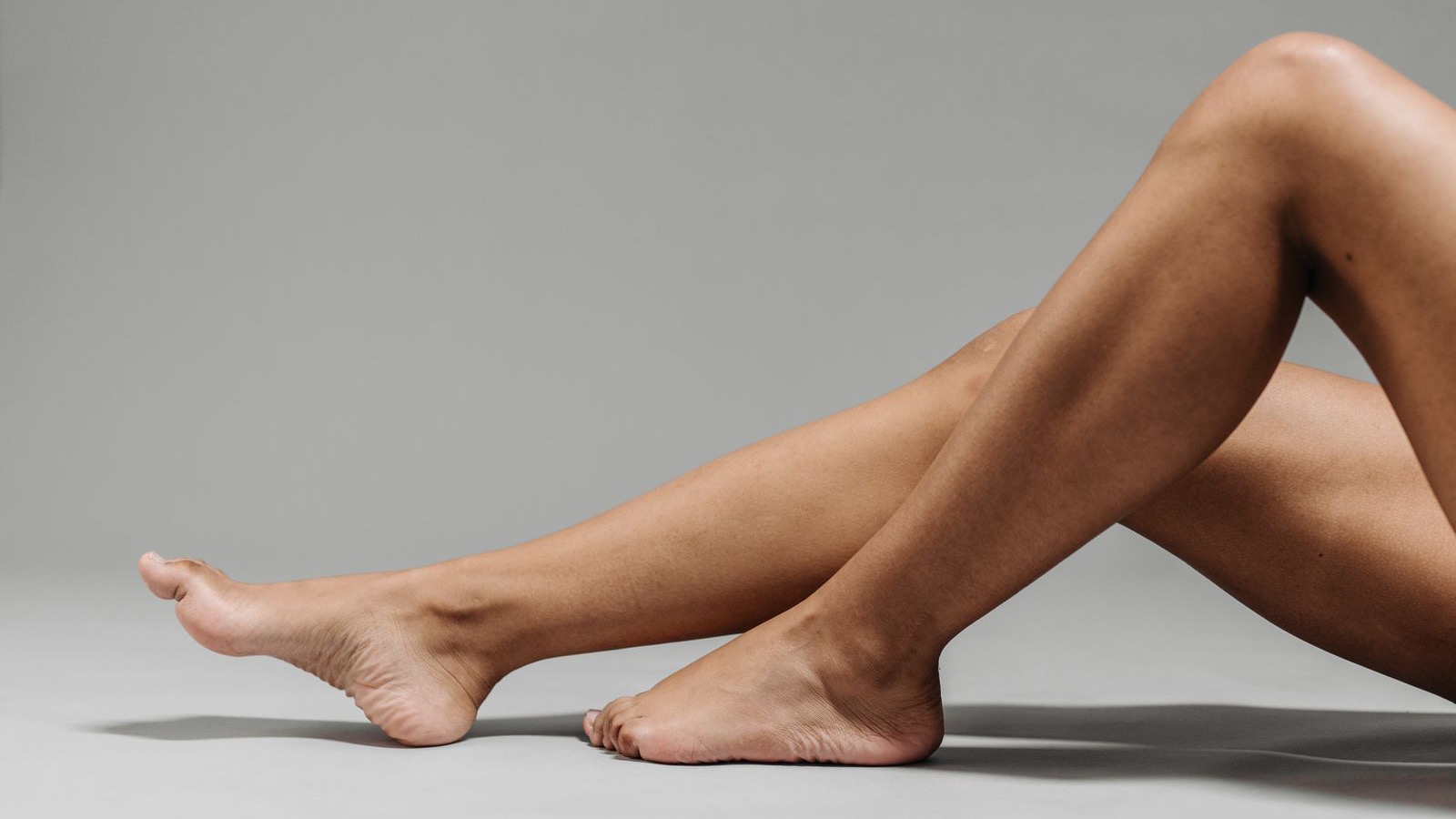
You get out of bed, put your foot down, and it feels like someone is driving a nail into the inside of your heel. Twenty steps later it eases off. By the end of a long day on your feet, it's back. You didn't twist anything, you didn't fall, and there's no bruise.
That pattern — worst with the first steps, better with movement, worse again after rest or a big day — is the signature of plantar fasciitis, the single most common cause of heel pain in adults.
It's also one of the most misunderstood. People are told to rest it, stretch it, roll it on a frozen bottle, buy insoles, and wait. Some of that helps. Some of it is theatre. And "rest completely" is often the worst advice of all, because the tissue responds to load and de-conditions when you take it away.
This guide covers what's actually irritated, how to tell plantar fasciitis apart from the three other things that cause heel pain, which treatments have real evidence, and how to keep training without making it worse.
TL;DR: Plantar fasciitis is degenerative irritation at the point where the plantar fascia attaches to the heel bone, not a simple inflammation you can ice away. The morning pain is the tell. Plantar-fascia-specific stretching beats calf stretching in the research, custom orthoses have moderate-certainty short-term evidence, and shockwave is the only treatment with medium and long-term support. Most cases improve over 3 to 12 months, and the fastest route through it is managing load rather than stopping entirely. Sudden jumps in running volume or step count are the usual trigger, which is exactly the thing a wearable can show you.
YouTube: Related video
What is actually irritated
The plantar fascia is a thick band of connective tissue that runs from your heel bone, along the sole of your foot, and fans out into your toes. Its job is to hold up the arch and act as a spring that stores and returns energy when you walk and run. Every step you take loads it.
In plantar fasciitis, the problem sits right at the attachment point on the heel. And here's the part most people get wrong: it isn't primarily an inflammatory condition.
When researchers look at tissue from chronic cases, they find something closer to a degenerative process — collagen disorganisation, thickening of the fascia, micro-tears, and a lack of the inflammatory cells you'd expect from something like a fresh sprain. That's why it's sometimes called plantar fasciosis, and it's part of why anti-inflammatories help the pain for a few hours but don't fix the problem.
A systematic review of systematic reviews summarising the plantar fasciitis literature found broad agreement on a few points: higher body mass index is a genuine risk factor, and the condition is common rather than rare. Estimates put lifetime prevalence around one in ten people, with most cases presenting between 40 and 60 years of age.
The other risk factors that keep showing up:
- Sudden increases in load — more running, more walking, a new standing-heavy job, a holiday spent on your feet
- Limited ankle dorsiflexion and a tight calf — less range at the ankle means more strain through the arch
- Prolonged standing on hard surfaces
- Unsupportive footwear, especially thin-soled shoes worn all day
- Higher body weight, largely because it increases the load per step
Notice how many of those are about cumulative load rather than one dramatic event. Plantar fasciitis is rarely an injury. It's usually a capacity problem that crossed a line.
The morning-pain signature
The first-steps pain has a name — post-static dyskinesia — and it's the most useful diagnostic clue you have.
Here's what's happening. When you sleep or sit for a while, the fascia and the surrounding tissue settle into a shortened, unloaded position. Fluid shifts. The first load after that rest period pulls on tissue that hasn't been stretched or warmed, and the result is a sharp, localised stab at the heel.
Then, as you keep walking, it warms up and the pain fades. That's the trap: people conclude it's "not that bad" and carry on with the same training. The pain is lowest in the middle of activity and highest after rest and after long days, which is exactly the opposite of how most muscle injuries behave.
Severity usually tracks with total load. A big weekend of walking, a long run, or a day of standing on concrete will produce a much worse morning two days later.
Is it definitely plantar fasciitis?
Heel pain has several common causes, and they need different treatment. Getting this wrong is how people spend six months stretching something that needed a different fix.
- Plantar fasciitis: sharp pain at the inside of the heel, worst with first steps, tender to press right at the attachment point on the heel bone.
- Insertional Achilles tendinopathy: pain slightly higher and further back, at the back of the heel where the tendon inserts. Often worse with hills and with shoes that press on the heel counter.
- Calcaneal stress fracture: deep, boring pain that gets worse with impact, and it hurts when you hop on that leg. This one needs imaging and a clinician, not stretching.
- Tarsal tunnel syndrome: burning or tingling into the sole and toes, often worse at night, sometimes with numbness. That's a nerve problem, not a fascia problem.
- Fat pad atrophy: pain directly under the heel bone that feels better on soft surfaces and worse barefoot on hard floors. Common in older adults and after repeated corticosteroid injections.
- Sural nerve or referred pain from the lower back: less common, but worth considering if nothing local is tender.
The tell for plantar fasciitis is the location plus the morning pattern plus point tenderness at the medial heel. If you have numbness, tingling, night pain at rest, pain in both heels with systemic symptoms, or you can't hop on that leg, get it looked at before you start a loading programme.
What actually helps, ranked by evidence
This is where the marketing and the research diverge. Here's how the main options stack up, based on the meta-analyses rather than on what's sold hardest.
| Treatment | Evidence | Practical verdict |
|---|---|---|
| Plantar-fascia-specific stretching | Moderate quality, better than calf stretching for short-term pain | First thing to try, cheap, do it daily |
| Custom foot orthoses | Moderate certainty, short-term pain reduction | Worth it if you stand a lot or symptoms persist |
| Taping (low-dye) | Low certainty, short-term relief | Useful for a race or a big day, not a cure |
| Extracorporeal shockwave therapy | The only intervention with medium and long-term support in one meta-analysis | Reasonable next step for stubborn cases, needs a clinic |
| Calf stretching alone | Very low to low quality evidence | Not useless, but clearly weaker than fascia-specific work |
| Corticosteroid injection | Short-term pain relief | Temporary; repeated injections risk fascia rupture and fat pad thinning |
| Night splints | Limited, mixed evidence | Worth trialling if morning pain is severe |
| Ice, rolling on a frozen bottle | No strong evidence | Fine for comfort, doesn't change the underlying process |
| Complete rest | No evidence, and de-conditioning | Counterproductive in most cases |
The 2022 meta-analysis in Clinical Rehabilitation pooled 236 studies covering more than 15,000 patients and found a long list of interventions that beat control for short-term pain: taping, laser, myofascial release, platelet-rich plasma, dry needling, botulinum toxin, stretching. In the medium and long term, only shockwave held up.
That's a useful reality check. Lots of things take the edge off for a few weeks. Very few change the trajectory. The things that do change the trajectory are the boring ones: graded loading, addressing calf and ankle range, and enough time.
Stretching: the version that beats the rest
If you only do one thing, make it plantar-fascia-specific stretching rather than generic calf stretching.
The difference is subtle but it matters. Calf stretching targets the gastrocnemius and soleus. Plantar fascia stretching pulls directly on the tissue that's irritated.
A meta-analysis of eight randomised trials found moderate-quality evidence that plantar fascia-specific stretching produced greater pain reduction than calf stretching in the short term, and very low-quality evidence for combined stretching versus sham.
How to do it:
- Sit with the affected ankle crossed over the opposite knee.
- Pull your toes back towards your shin with your hand until you feel a stretch along the arch and into the heel.
- Hold for 30 seconds, repeat 3 times.
- Do it before your first steps in the morning, before training, and in the evening.
The morning set is the important one. If you stretch the fascia before you load it, the first-steps pain is often noticeably milder. Many people find that alone is worth the effort.
Load management: how to keep running
The instinct is to stop. The evidence and clinical experience both point the other way: keep loading, reduce the spike.
Tissue adapts to load it can tolerate. Take all load away and you lose capacity, then the first walk back to normal life produces the same pain. The goal is to find the volume you can do without a worse morning, and build from there.
A practical approach:
- Cut volume, not frequency. Drop total running volume by 30 to 50 percent for two to three weeks, but keep running three or four times a week. Short and often beats long and rare.
- Use pain as the guide, measured in the morning. If your first-steps pain is no worse the day after a run, the load was acceptable. If it's clearly worse two mornings in a row, back off.
- Cap the ramp. Keep week-on-week increases in the 10 percent range and avoid stacking a new distance with a new surface, new shoes, and a new pace in the same week.
- Cross-train the rest. Cycling, swimming, and the elliptical keep your aerobic fitness without hammering the heel.
- Watch your total steps, not just your runs. A rest day spent on your feet for 14,000 steps is not a rest day for the fascia.
That last point is where a wearable earns its keep. Most people track runs and ignore everything else, then can't work out why a week of "easy" training flared things up. Your daily step count is the honest measure of cumulative load on that heel.
Shoes, orthoses, and what to put on your feet
Footwear changes the load per step, so it matters more than most people expect.
- Everyday shoes: something with a firm heel counter, a bit of cushioning under the heel, and a sole that doesn't flex in the middle. Avoid flat, thin, flexible shoes for long days.
- Running shoes: comfort matters more than category. The research on "correct" shoes by foot type is weak; the research on comfort and injury is more consistent.
- Custom orthoses: moderate-certainty evidence for short-term pain reduction. Off-the-shelf insoles have weaker support but are cheap to trial.
- Barefoot or minimal shoes: a fine long-term project for some people, a bad idea mid-flare.
- Night splints: a sock or brace that holds the ankle at 90 degrees overnight keeps the fascia from tightening up. Evidence is limited, but the logic is sound and the cost is low. Worth a two-week trial if your morning pain is the worst part.
What doesn't work, or is oversold
- Aggressive rolling on hard tools. The fascia is a load-bearing band, not a knot. Hard, painful rolling can irritate it further. Gentle massage of the calf is more useful.
- Repeated corticosteroid injections. They reduce pain in the short term but carry a real risk of fascia rupture and fat pad atrophy with repeat dosing.
- "Fix your gait" gadgets sold as cures. Changing how you run is a slow, coached process. A gadget rarely does it.
- Waiting for it to disappear on its own while training exactly as before. Most cases do settle, but usually because load changed, not because time passed.
How long it takes
Most people improve substantially within three to six months, and the majority are pain-free by twelve months. A minority — often those with long-standing symptoms, high body weight, or jobs that require standing all day — take longer.
The frustrating part is the timeline itself. Plantar fasciitis is a slow tissue. Progress is measured in weeks, not days, and the pain will fluctuate. A bad morning after a good week is normal and doesn't mean you've gone backwards.
What does predict a faster recovery: getting the diagnosis right, stretching the right tissue, and keeping a consistent, moderate load instead of cycling between "push through it" and "stop completely."
What your watch can show you
A wearable can't diagnose plantar fasciitis, and it can't feel your heel. What it can do is make the load side visible.
Three things are worth watching:
- Step count trend. A jump of several thousand steps a day, sustained for a week, is the most common precursor to a flare. Seeing it in a chart makes the connection obvious.
- Training minutes and workout frequency. If your workout minutes climb sharply while your recovery score falls, that's the pattern that produces overuse problems.
- Recovery and resting heart rate. These don't measure your foot, but they tell you whether your body is in a state to absorb the load you're planning. A recovery score that's been sliding for a week is a reason to keep the ramp gentle.
If you're already tracking everything in Apple Health, Century turns your step count, workouts, heart rate variability, and sleep into a daily health score and a recovery score, so a creeping load spike shows up as a trend instead of a surprise.
For the running-specific side of load management, the guide to shin splints and how to build mileage without breaking covers the same principle from a different angle, and if the pain is at the front of the knee rather than the heel, why knees hurt when you run is the closer match.
A six-week plan that respects the tissue
Week 1 to 2: calm it down and find your baseline
- Plantar fascia stretch three times a day, including before your first steps
- Running volume down 30 to 50 percent, frequency unchanged
- Swap one run for cycling or swimming
- Record your morning pain out of 10 every day. This is your real progress measure
- Consider a night splint if mornings are the worst part
Week 3 to 4: rebuild capacity
- Add calf raises: three sets of 12, slow, both legs then single leg
- Keep the stretching
- Start nudging running volume back up, no more than 10 percent a week
- Add toe towel scrunches and short-foot exercises if you want to build intrinsic foot strength
Week 5 to 6: return to normal
- Running volume back towards baseline, still watching the next-morning response
- Keep the morning stretch indefinitely. It's cheap and it works
- If pain is unchanged or worse at this point, that's the trigger to see a physiotherapist or a sports doctor, and to ask about shockwave
When to see someone
Book an appointment if:
- You can't hop on the affected leg, or the pain is deep and constant
- You have numbness, tingling, or burning in the sole
- Both heels are affected alongside other joint pain or systemic symptoms
- You've done six to eight weeks of consistent loading and stretching with no improvement
- You've had repeated steroid injections and the pain keeps returning
The short version
Plantar fasciitis is a load problem at the heel attachment, and the morning pain is the fingerprint. The fixes that hold up are plantar-fascia-specific stretching, sensible orthoses, graded loading instead of rest, and patience measured in months. Shockwave is the treatment with the best long-term evidence if the basics aren't enough. And the single most useful thing you can do is notice when your step count or training volume jumps before your heel tells you about it.
Century AI helps you understand your body with a daily health score, recovery score, and sleep insights — using the watch you already wear.