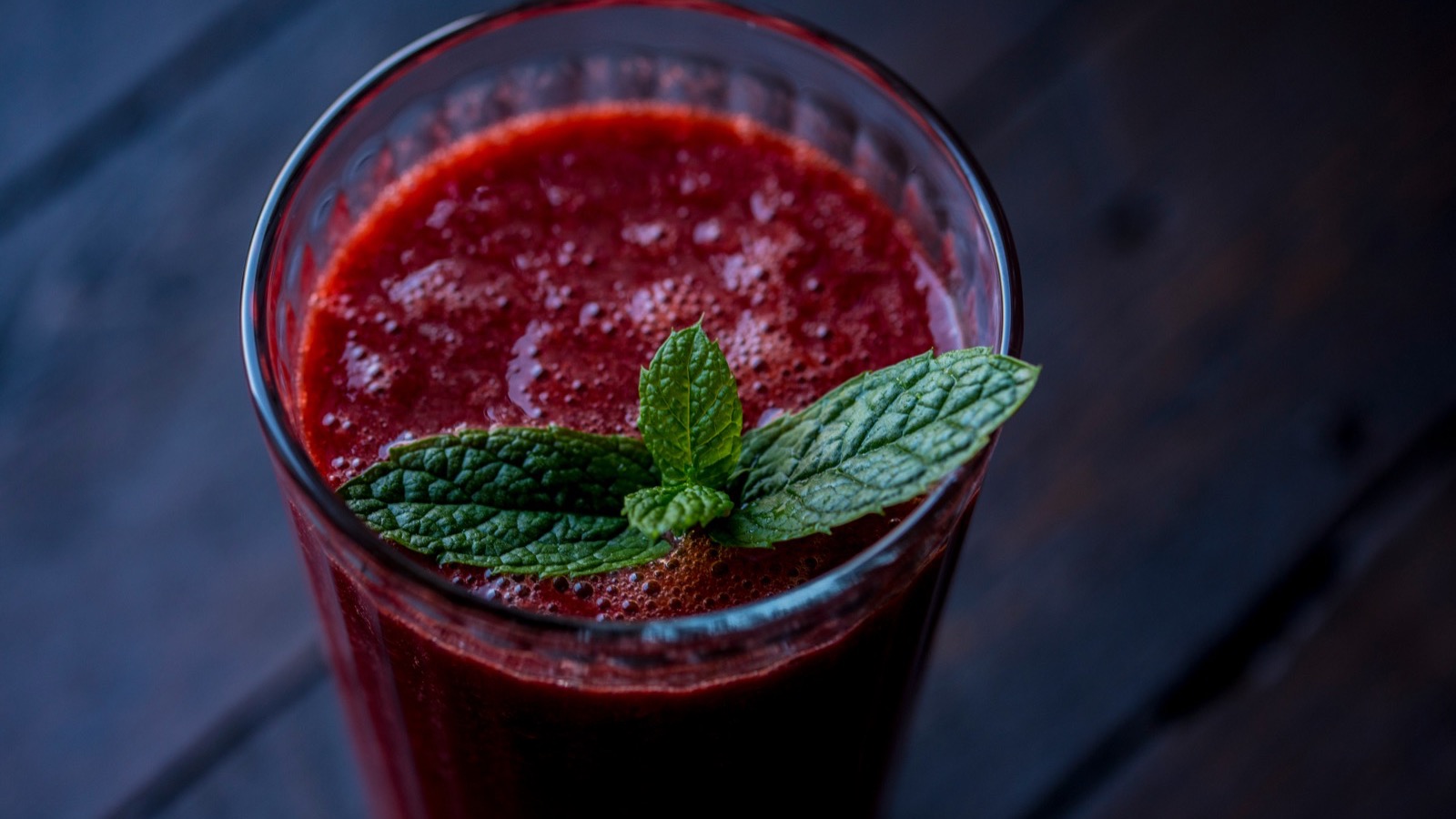
Beetroot juice is the closest thing endurance sport has to a legal performance drug. It has more randomised controlled trials behind it than almost any other food or supplement, it appears on the shelves of every running shop, and it has a mechanism that sounds almost too clean: you drink a purple shot, your blood vessels open up, and the same pace costs your muscles less oxygen.
That mechanism is real. The performance benefit is real too — but it is much smaller than the marketing implies, it shows up in some people and not others, and a lot of athletes are spending money on it with no chance of a return.
This post covers what nitrate actually does in the body, what the pooled trial data says, who the evidence says gets nothing from it, the dose and timing used in the successful studies, and how to run a fair test on yourself using the heart rate and recovery data your watch already collects.
TL;DR: Dietary nitrate works through the nitrate → nitrite → nitric oxide pathway, which improves muscle contraction efficiency and blood flow. Pooled across 73 randomised trials, nitrate supplementation significantly increased power output, time to exhaustion and distance covered, and significantly reduced the oxygen cost of exercise — but it did not improve time-trial performance, perceived exertion or VO2 max. The average effect size is small (d ≈ 0.17). The people who benefit most are recreationally active adults doing submaximal or intermittent work; studies in highly trained athletes (VO2 max ≥ 65 ml/kg/min) and in women-only groups generally found no benefit. Effective doses in the literature sit around 5–9 mmol of nitrate a day (roughly 400–800 mg), taken 2–3 hours before exercise, with 3–6 days of loading for a slightly bigger effect. Skip the antibacterial mouthwash — it kills the oral bacteria your body needs to convert nitrate into nitrite in the first place. Expect a few percent at best, and treat it as one small lever, not the engine.
YouTube: Related video
What nitrate actually does in your body
The pathway is unusual, because it doesn't depend on your own enzymes for the first step.
You swallow nitrate (NO3⁻) from beetroot, spinach, rocket or a concentrated shot. Some of it is absorbed in the upper gut and re-enters circulation, but a meaningful fraction stays in your saliva. There, bacteria that live on the surface of your tongue reduce nitrate to nitrite (NO2⁻). You swallow that nitrite, it's absorbed, and in blood and tissue it's converted to nitric oxide (NO) — a signalling molecule that relaxes blood vessels and influences how efficiently muscle uses oxygen.
Two practical consequences fall straight out of that sequence.
1. Antibacterial mouthwash blunts the effect. If you kill off the oral bacteria with a chlorhexidine rinse, you cut off the step that makes nitrate available as nitrite. Studies have shown the blood pressure and exercise effects of a beetroot dose are largely abolished when mouthwash is used around the same time. If you're testing beetroot, don't use a strong antibacterial rinse in the hours before or after.
2. The plasma nitrite peak arrives about 1.5 to 2.5 hours later. In the dose–response work by Wylie and colleagues, plasma nitrite peaked around 1.7 hours after ingestion with a half-life of roughly 6 hours. That's why the standard advice is "2 to 3 hours before you start" — not because of tradition, but because the substrate has to go through two conversion steps first.
What nitrate does at the tissue level is best summarised as efficiency. It doesn't make your heart or lungs deliver dramatically more oxygen. It appears to reduce the oxygen cost of a given rate of muscle work — better mitochondrial efficiency, improved calcium handling in muscle fibres, and more favourable blood flow distribution. In practice, that means more work per breath.
What the pooled research shows — and what it doesn't
This is where beetroot gets interesting, because the meta-analyses are large, recent and agree with each other on the pattern.
The largest recent pooled analysis covered 73 randomised controlled trials with 1,061 participants across running, cycling, rowing, swimming and kayaking. Here's what it found:
| Outcome | Result | Confidence |
|---|---|---|
| Power output | Increased (+4.6 W, p < 0.0001) | Low-quality evidence |
| Time to exhaustion | Increased (+25.3 s, p < 0.00001) | Low-quality evidence |
| Distance covered | Increased (+164 m, p = 0.03) | Very low-quality evidence |
| Oxygen cost of exercise (VO2 at a given intensity) | Decreased (−0.04 L/min, p < 0.0001) | Low-quality evidence |
| Time-trial performance | No significant difference | — |
| Perceived exertion | No significant difference | — |
| VO2 max | No significant difference | — |
| Blood lactate | No significant difference | — |
Read that table carefully, because it explains most of the confusion around beetroot.
Time to exhaustion improved reliably. Time trials — the thing most athletes actually care about, a fixed distance covered as fast as possible — did not improve significantly when pooled. The oxygen cost of exercise dropped, which is the mechanism doing exactly what it should. VO2 max didn't move, because nitrate is not a training stimulus; it's an efficiency tweak.
An earlier meta-analysis in Sports Medicine reached the same shape of conclusion: nitrate reduced the oxygen cost of exercise with small, inconsistent performance gains. The ergogenic effect is real, but it lives in the small-to-trivial range.
The most honest single number comes from a separate meta-analysis of 80 randomised crossover trials: an overall pooled effect size of d = 0.174. That's a small effect. It's also, in endurance sport, potentially the difference between finishing a race and finishing it slightly faster — which is exactly why it survives commercially while being unimpressive statistically.
Who doesn't get a benefit
This is the part that gets skipped. The subgroup data is consistent, and it tells a clear story.
Highly trained athletes usually see nothing. In the pooled analysis, athletes with a VO2 max of 65 ml/kg/min or above showed no significant benefit (d = 0.021, p = 0.745). If you're a well-trained endurance athlete who has already optimised sleep, training load and fuelling, nitrate is very unlikely to add anything. The mechanism — reducing the oxygen cost of submaximal work — has less room to operate when the system is already highly efficient.
Studies in women-only groups generally found no effect. Pooling the six single-sex trials in women produced d = 0.116 with a confidence interval that crossed zero (p = 0.347). There may be physiological reasons — differences in nitric oxide synthesis, vascular function and oxidative stress — or it may partly reflect how few trials have been run properly in women, which is a long-standing problem in sports science. Either way, the honest answer for a woman considering beetroot is: the evidence base doesn't support a reliable benefit yet.
Sprint and short-duration efforts are a mixed bag. A separate meta-analysis of 30-second cycling sprints found that an acute low dose improved time-to-peak power, but had no effect on mean power, peak power or minimum power — and multi-day dosing didn't help at all. Nitrate looks like an endurance and repeated-effort tool, not a sprint booster.
The best responders look like moderately fit recreational athletes. Benefits cluster in people with a VO2 max roughly in the 45–65 ml/kg/min range, and in untrained or recreationally active people more than in elites. If you're a weekend cyclist or a regular runner chasing a personal best rather than a podium, you're in the group where the evidence is most favourable — which is a narrow but genuinely useful niche.
The dose and timing the studies used
This is where most people go wrong, because "I drank a beetroot smoothie once" is not the protocol that was tested.
Dose. The range with the most support is 5–9 mmol of nitrate per day. In the meta-analytic work, benefits were clearer above roughly 4 mmol a day. As a practical anchor, the standard concentrated beetroot "shot" used in research — 70 ml — contains about 6.4 mmol (roughly 400 mg) of nitrate. Two shots would put you in the higher end of the effective range.
Timing. Peak plasma nitrite lands around 1.5–2.5 hours after ingestion, so take it 2–3 hours before your session or race.
Loading versus acute. Some trials used a single dose 2–3 hours out, others used 3–6 days of daily dosing. The pooled data suggests duration matters less than you'd think — the single-bolus and multi-day approaches land in a similar place, with multi-day dosing often slightly ahead. If a race matters, loading for 3 days and then taking a dose on race morning is the well-trodden approach. For a training session, a single dose 2–3 hours beforehand is a reasonable test of whether you respond at all.
Food versus juice versus capsules. Beetroot juice is the delivery method in the overwhelming majority of successful trials. Vegetables work in principle — beetroot, spinach and rocket are the richest sources — but the practical problem is volume. Dietary nitrate from vegetables arrives in concentrated form only in relatively large servings, and it takes a serious amount of spinach to match one 70 ml shot. If capsules are convenient, be aware that studies using capsules have been far less consistently positive, and some have found nothing at all.
Side effects. Red urine and red stool — beeturia — affects a minority of people and is harmless. The more common complaint is gastrointestinal: some formulations cause cramping or loose stools, particularly at higher doses, which is worth knowing before race day. Nitrate also lowers blood pressure modestly, so if you take blood pressure medication, talk to your doctor first.
How to test whether it works for you
Because the pooled effect is small and individual variation is large, the only meaningful question is whether you respond. Your watch can help you answer that, if you set the test up properly.
Fix the variables. Same route or same treadmill, same speed, same duration, similar time of day, similar caffeine and food beforehand, and a proper warm-up. Nitrate's main measurable effect is on the oxygen cost of submaximal work, so the outcome you're looking for is your heart rate at a fixed pace — or your pace at a fixed heart rate.
Run a paired test. Do a control session, then repeat two or three days later with a beetroot dose 2–3 hours before. Compare average heart rate across the steady-state portion, how much your heart rate drifted from minute 10 to minute 40, and how hard the session felt. If nitrate is doing anything for you, the classic signature is a slightly lower average heart rate at the same output, or the same heart rate with less drift.
Century is useful here because it puts your heart rate, HRV and recovery score in one place with a baseline to compare against. A beetroot test doesn't need a lab — it needs a clean comparison between two sessions you can actually trust. Look at the day after, too: if your training load was identical and your recovery score moved, that's information. If everything looks the same, you've probably learned that you're a non-responder, which is worth more than another month of buying shots.
Be honest about the noise floor. Day-to-day heart rate varies with sleep, hydration, caffeine and temperature. A 2–3 bpm difference at the same pace is within normal variation for a lot of people, so don't read a single session as proof. Two or three paired sessions is a much fairer test.
For the wider picture of how nutrition timing interacts with training, how to time nutrition for performance covers the rest of the fuelling picture, and Zone 2 training and longevity explains why the type of session you pair beetroot with matters.
A practical protocol
If you want a version worth actually trying:
- Pick a session it can help. Steady submaximal work — a long ride, a Zone 2 run, repeated efforts — is where the mechanism applies. Don't expect it to fix a 5K time trial.
- Dose: 70 ml of concentrated beetroot juice, roughly 400 mg (6.4 mmol) nitrate. Two shots if you want to sit in the higher end of the studied range, but build up rather than starting there if your gut is sensitive.
- Take it 2–3 hours before the session. For a race, add 3 days of daily dosing beforehand.
- Skip antibacterial mouthwash in the window around your dose.
- Keep the rest of your routine identical so the comparison means something.
- Judge it over 2–3 pairs of sessions, not one. If there's no repeatable signal, save your money.
Bottom line
Beetroot juice is not hype, and it's not magic. It has a real mechanism, a genuinely large trial base, and a small average effect that shows up most clearly in recreationally active people doing submaximal endurance work — as a modest reduction in the oxygen cost of exercise rather than a dramatic jump in performance.
If you're a highly trained athlete, the evidence says you're unlikely to notice. If you're a woman, the honest answer is that the research hasn't done its job yet. If you're a regular runner or cyclist who wants a few percent on long steady efforts and is willing to test it properly, it's one of the better-evidenced options available. Just don't skip the part where you check whether it works for you.
Century AI helps you understand your body with a daily health score, recovery score, and sleep insights — using the watch you already wear.