Most of us spend our twenties and thirties training for how we look. Somewhere around 40, the math quietly changes: what we're really training for is how long we stay capable.
Bone is part of that shift. You reach peak bone mass in your late twenties and early thirties, then spend the rest of your life either maintaining it or slowly losing it. For women, the drop accelerates sharply around menopause, when estrogen falls. That's the window where people start hearing the word "osteopenia" from a doctor and getting handed a leaflet about calcium.
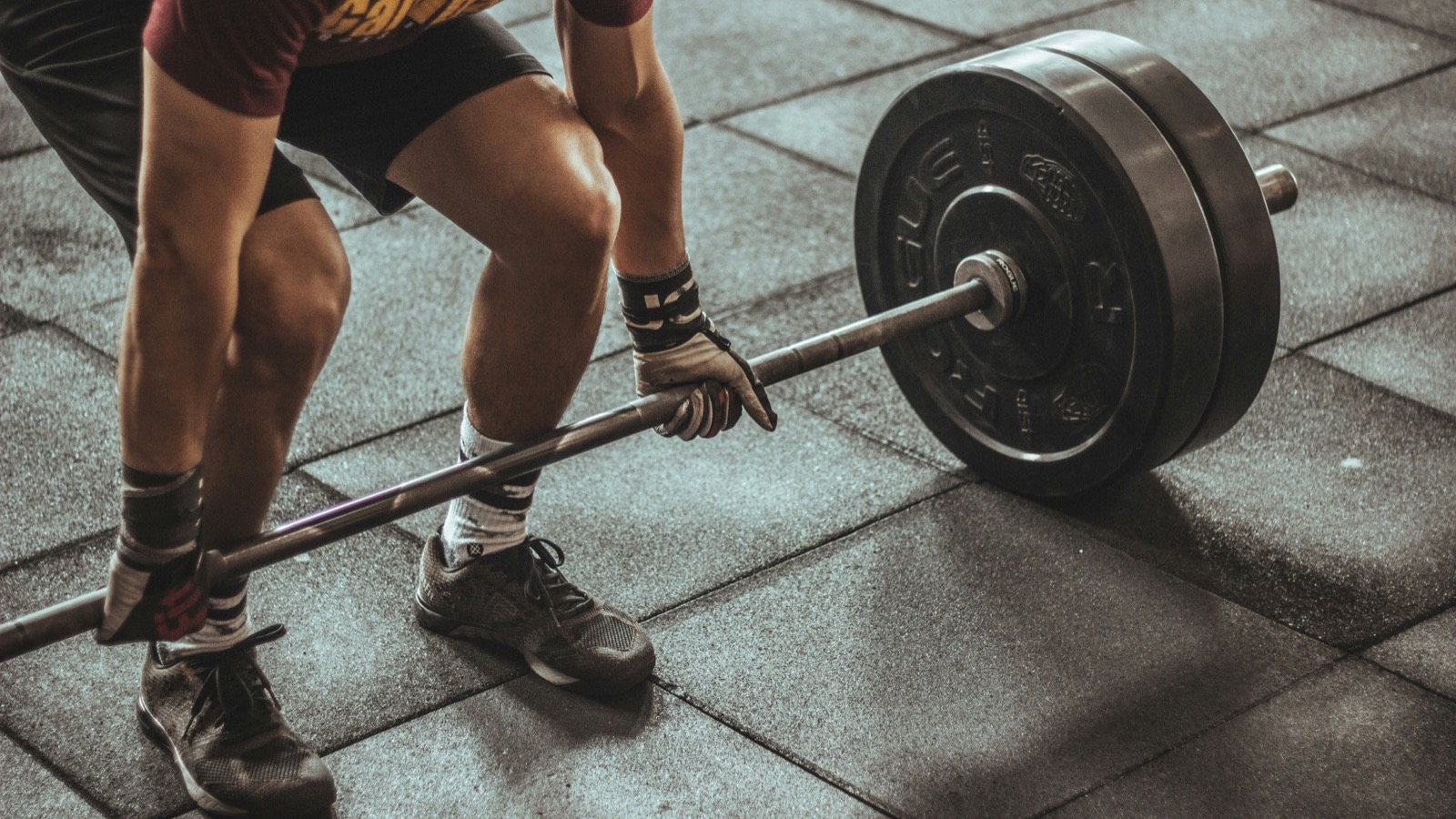
The leaflet is fine. It's also incomplete. Bone is living tissue that remodels itself based on the mechanical load you put through it — which means the single most effective thing you can do for your skeleton in midlife is also the thing most people never get told to do: lift heavy things, and keep lifting them.
This post covers how bone actually responds to load, what the best trials found, why the "lifting is dangerous if your bones are thin" advice has been substantially revised, and how to build a weekly routine that loads your skeleton without wrecking your recovery. Your watch won't measure your bone density, but it will tell you a lot about whether the training is working.
TL;DR: Bone adapts to mechanical load — specifically to high-magnitude forces applied at speed, not to light movement repeated a lot. In the LIFTMOR randomized controlled trial, 101 postmenopausal women with low bone mass did 8 months of supervised high-intensity resistance and impact training twice a week for 30 minutes (5 sets of 5 reps above 85% of 1RM) and gained 2.9% lumbar spine bone mineral density versus a 1.2% loss in the low-intensity control group, with one minor adverse event across the whole trial. A 2023 meta-analysis of 80 trials and 5,581 postmenopausal women found exercise produces small-to-moderate improvements at the lumbar spine (SMD 0.29), femoral neck (0.27), and total hip (0.41), and those effects held in women who already had osteopenia or osteoporosis. Government guidelines recommend muscle-strengthening activity on at least 2 days a week and describe bone-strengthening activity as a separate category. Practical takeaway: 2-3 progressive strength sessions a week, meaningful loads, plus some impact work, is the bone stimulus that matters. Walking and light dumbbells barely register.
YouTube: Related video
Bone is not scaffolding. It's tissue that reads your training log.
The old model of bone was passive: a frame that you slowly lose material from, like a wall with a leak. The current model is that bone is constantly being torn down and rebuilt in response to load, and that it's surprisingly picky about which loads count.
The useful shorthand is that bone responds to high-magnitude strain applied at a high rate. In plain language:
- Heavy matters more than often. A load that's a real challenge to your muscles and joints is a load your bone notices.
- Fast matters. The rate at which force arrives changes the signal, which is why jumping and landing, or moving a weight explosively through the concentric phase, produce a different bone response than a slow grind.
- Novel matters. Bone adapts, which means the same load forever stops being a stimulus. Progressive overload isn't a gym-bro concept here; it's the mechanical requirement.
- Axial loading matters most. Forces travelling down through your spine, hips, and legs — squats, deadlifts, carries, jumps, running — hit the sites that fracture.
Swimming and cycling are excellent for your heart and lungs and almost irrelevant for your bones, because the load goes away. Walking sits in an awkward middle: good for you in a dozen ways, but for most people it's not a strong enough stimulus to build bone. Your skeleton is looking for a reason to stay dense. On a flat 30-minute walk, it doesn't find one.
What the actual trials found
Two studies are worth knowing here, plus the guidelines that sit on top of them.
The first is LIFTMOR — a randomized controlled trial in 101 postmenopausal women with low bone mass, average age 65. One group did supervised high-intensity resistance and impact training: twice a week, 30 minutes per session, 5 sets of 5 repetitions at above 85% of their one-rep max, plus impact work. The other group did a home-based low-intensity program of the kind still commonly handed out.
After eight months, the differences were not subtle:
| Outcome | High-intensity group | Low-intensity control |
|---|---|---|
| Lumbar spine bone density | +2.9% | −1.2% |
| Femoral neck bone density | +0.3% | −1.9% |
| Femoral neck cortical thickness | +13.6% | +6.3% |
| Functional performance (all measures) | Significantly better | — |
Compliance was 92% in the training group, and across the whole trial there was one recorded adverse event — a minor lower back spasm. The authors noted, pointedly, that the belief high-intensity loading is unsafe for women with low bone mass was "contrary to current opinion" of the results. The key qualifier: this was highly supervised, with technique coached from day one.
The second piece of evidence is broader. A 2023 meta-analysis in Osteoporosis International pooled 80 controlled exercise trials with 5,581 postmenopausal women, all at least six months long. Exercise improved bone mineral density at the lumbar spine (SMD 0.29, 95% CI 0.16–0.42), femoral neck (0.27, 0.16–0.39), and total hip (0.41, 0.30–0.52) compared with controls. Two findings there matter for how you'd act:
- Effects were similar whether the women already had osteopenia/osteoporosis or normal bone density. You're not "too late."
- Supervision didn't drive the difference. Programmed, progressed training did the work.
A 2025 network meta-analysis in Scientific Reports, which ranked exercise types head-to-head across 49 studies, landed in the same place: aerobic training, resistance training, their combination, and whole-body vibration all produced meaningful bone density changes in older postmenopausal women — with resistance and combined training among the more substantial.
Why "don't lift heavy if your bones are thin" got it backwards
For years, women with osteopenia were steered toward light resistance bands, aquatic exercise, and lots of walking. The logic was risk-avoidance: if the bone is fragile, don't stress it.
The problem is that this removes the exact signal the bone needs to rebuild. Under-loading is not neutral for bone; it's the same as telling your skeleton it can shed material. Meanwhile, the fracture risk that people worry about in the gym mostly comes from falls and incidents, not from controlled loading with good technique.
That doesn't mean you ignore risk. It means you manage it the way the LIFTMOR trial did: coached technique first, real progression second, sensible exercise selection throughout. If you have diagnosed osteoporosis, a prior fragility fracture, or you're on bone-active medication, that's a conversation with your doctor or a physio before you start loading. But "your bone density is low, so stick to light weights" is outdated guidance, and the trial evidence is partly why.
What a bone-loading week actually looks like
You don't need to train like a powerlifter. You need two things: enough load, and consistency for long enough that a bone remodeling cycle can complete (months, not weeks).
1. Two to three strength sessions per week. Government guidance recommends muscle-strengthening activity on at least two days a week for adults; if bone is your priority, treat three as better than two and two as the non-negotiable floor.
2. Anchor on a few big, axial lifts. Squat, deadlift or hip hinge variation, a press, a row or pull, and a loaded carry. These are the movements where you can add weight for years, which is exactly the quality bone needs.
3. Stay in a rep range where load is meaningful. Somewhere around 5–8 reps with a weight that genuinely challenges you for the strength work. This is the LIFTMOR zone — heavy sets of five — scaled to where you are. If you're new to it, start with 3 sets of 8 and progress the weight weekly rather than starting heavy.
4. Add impact if your joints and orthopaedic history allow. Jumping, hopping, skipping, stomping, or landing drills create the high-rate loading bone responds to. Two minutes of it, done well, before you're fatigued. If impact isn't appropriate for you, faster concentric phases on lifts are the substitute.
5. Progress on purpose. If the load never changes, the stimulus disappears. Aim to add weight or reps most weeks for a few months at a time, then deload — the same rhythm used in the deload week guide.
6. Support it with the boring stuff. Adequate protein (roughly 1.2–1.6 g per kg of bodyweight is a common target for active adults), enough calcium and vitamin D from food where possible, no smoking, and better-than-terrible sleep. You cannot out-lift a chronic protein and vitamin D deficit, and you can't remodel bone well on five hours of sleep.
A sample week that hits all of it:
| Day | Session | Purpose |
|---|---|---|
| Monday | Full-body strength: squat, press, row, carry — 5×5 heaviest | Primary axial loading |
| Tuesday | Easy cardio, 30–45 min conversation pace | Aerobic base, recovery |
| Wednesday | Rest or walk | — |
| Thursday | Full-body strength: hinge, pull, single-leg, accessories — 3×8 | Second loading day |
| Friday | Intervals or hills, 20–30 min | Impact and high-rate loading |
| Saturday | Strength (optional third day) or jump/impact circuit | Extra stimulus if recovering well |
| Sunday | Rest | — |
That's a repeatable, unglamorous structure. It also looks almost identical to the strength training for longevity plan, which is the point — the training that keeps you strong as you age is the training that keeps your bones dense.
How you know it's working when you can't measure bone at home
Bone density is measured by DEXA scans, usually years apart. In between, you need proxies. Fortunately the proxies are decent, and most of them show up in data you already have.
Grip strength is the most studied. It tracks with overall strength and predicts all-cause mortality and fracture risk. If your grip is climbing, your loading is probably working. We went through the evidence in the grip strength and longevity piece.
Walking steadiness is Apple's quiet gift here. Gait changes show up before falls do, and Apple Watch flags low or very low walking steadiness. Here's how to interpret it in the walking steadiness guide.
Load progression is the most honest metric of all: write down what you lifted. If your squat and deadlift numbers are flat for three months, your bone stimulus is flat too.
VO2 max trend, resting heart rate, and HRV tell you whether the whole system is tolerating the work. Bone adapts in the same body that has to recover from the training, so if your recovery signals are collapsing every week, the strength block isn't sustainable.
This is the part Century is built for. It can't see your bone density, but it can show whether your strength and cardio blocks are actually moving your trends in the right direction — daily health score, recovery, resting heart rate, and VO2 max over weeks rather than single readings. When you're doing something as slow-moving as bone remodeling, trends are the only honest feedback loop you have.
The short version
Bone density after 40 is not a calcium problem. It's a loading problem.
The trial evidence is clear enough to act on: high-intensity, progressive resistance training with some impact work, two to three times a week, improves bone density at the spine and hip in postmenopausal women — including women who already have low bone mass — and it improves strength, balance, and function at the same time. Light resistance and walking do not replicate the effect, no matter how many steps you accumulate.
If you're 40-plus and lifting nothing heavier than your grocery bags, changing that is one of the highest-leverage health decisions available to you. Get the movement patterns coached, start lighter than your ego wants, and add weight on purpose for years.
Century AI helps you understand your body with a daily health score, recovery score, and sleep insights — using the watch you already wear.