WHOOP and Oura get compared constantly, and almost every comparison ends in the same place: "Oura is better for sleep, WHOOP is better for training." That's not wrong, but it's not useful either. It doesn't tell you which one to spend money on.
The two products look similar on a spec sheet because they measure the same physiology. Both pull heart rate off your skin all night, both compute HRV and resting heart rate, both turn that into a single morning number you're supposed to obey. Underneath, though, they're built for different jobs. WHOOP is a training load instrument that happens to track sleep. Oura is a sleep and readiness instrument that happens to track activity.
So the honest question isn't "which is more accurate." It's "which one is measuring the thing you're actually trying to change."
TL;DR: Both are accurate enough to be useful. In the most direct head-to-head validation, Oura had the edge for overnight HRV (concordance 0.99 vs 0.94 for WHOOP 4.0 against ECG over 536 nights), and both were solid for resting heart rate. Sleep staging is comparable between them (61% vs 60% agreement with polysomnography in a six-device study). The bigger difference is philosophy: WHOOP gives you a strain target and expects you to chase it, Oura gives you a readiness score and stays quiet. WHOOP is subscription-only with hardware included (roughly $199 to $359 a year depending on tier); Oura is a ring purchase plus a monthly membership. If you already wear an Apple Watch, neither is strictly necessary — a daily score built from the HRV and resting heart rate you already collect covers most of what these devices charge for.
YouTube: Related video
What you're actually comparing
WHOOP: a training load company
WHOOP ships as a screenless band you wear on your wrist or upper arm. No display, no notifications, no watch faces. That's deliberate. The pitch is that a screen would distract you from training, so all the information lives in the app.
The product is organized around three numbers:
- Strain, a 0–21 score for cardiovascular load accumulated during the day
- Recovery, a 0–100% score computed overnight from HRV, resting heart rate, sleep performance, and respiratory rate
- Sleep, scored on duration, efficiency, and stage composition, plus a "sleep need" figure that adjusts for strain and sleep debt
WHOOP's current hardware generation adds journaling, strength training detection, and on the higher tiers an ECG with irregular rhythm notifications and overnight blood pressure insights. The company has always sold hardware as part of the membership rather than as a separate purchase.
Oura: a sleep and readiness company
Oura is a titanium ring with sensors on the inside, worn on a finger. Fingers give a better pulse signal than wrists for most people, especially at rest, which is one reason ring wearables tend to do well on overnight heart data.
Oura organizes information differently:
- Readiness, a 0–100 score blending HRV, resting heart rate, body temperature deviation, sleep, and previous-day activity
- Sleep, scored on total sleep, efficiency, latency, timing, and stage breakdown
- Activity, a daily movement goal that's less about load and more about "keep moving"
- Temperature deviation and, on newer hardware, cardiovascular and respiratory insights
There's no strain target. Oura nudges you toward sleep regularity and recovery, and it's noticeably quieter about pushing you to train harder.
That's the fork in the road. Everything else follows from it.
The accuracy question, using actual validation studies
Most comparisons rely on vibes and reviewer impressions. There is real validation data, and it's worth reading because it changes how much weight you should put on these numbers.
The most direct comparison comes from a 2025 study at Ohio State that put five wearables — Oura Gen 3, Oura Gen 4, WHOOP 4.0, Garmin Fenix 6, and Polar Grit X Pro — against an ECG reference across 536 nights in 13 healthy adults. The authors reported no competing interests, which matters in a field where a lot of device research is manufacturer-funded.
For overnight resting heart rate:
| Device | Concordance with ECG | Mean absolute percentage error |
|---|---|---|
| Oura Gen 4 | 0.98 | ~1.9% |
| Oura Gen 3 | 0.97 | ~1.7% |
| WHOOP 4.0 | 0.91 | ~3.0% |
| Polar Grit X Pro | 0.86 | ~2.7% |
For overnight HRV:
| Device | Concordance with ECG | Mean absolute percentage error |
|---|---|---|
| Oura Gen 4 | 0.99 | ~6.0% |
| Oura Gen 3 | 0.97 | ~7.2% |
| WHOOP 4.0 | 0.94 | ~8.2% |
| Garmin Fenix 6 | 0.87 | ~10.5% |
| Polar Grit X Pro | 0.82 | ~16.3% |
Two things are worth taking from this. First, Oura's overnight heart data is excellent, and the gap between the two Oura generations is small — you don't need the newest ring to get good HRV. Second, WHOOP is not inaccurate. A concordance of 0.94 on HRV is good agreement. It's just a step behind Oura on this particular measurement, and the error is roughly 8% versus 6%.
Now sleep staging, which is where most people assume these devices fall apart. In a 2022 study that put six wearables against polysomnography in a sleep lab, agreement on multi-stage classification (light, deep, REM, wake) was 61% for Oura and 60% for WHOOP. For simply deciding sleep versus wake, both were around 86–89%. In other words, the two devices were effectively tied, and both were mediocre at naming specific stages.
That last point matters more than it sounds. Neither device is reliably telling you "you got 42 minutes of deep sleep." It's telling you something correlated with deep sleep, with a meaningful error bar. A separate 2024 comparison found Oura Gen 3 wasn't statistically different from polysomnography for wake, light, deep, or REM — which is unusually good — while a manufacturer-funded validation of Oura's Gen 3 staging algorithm against multi-night PSG reported staging accuracy between 75.5% (light sleep) and 90.6% (REM).
The practical upshot: trust trends in HRV and resting heart rate from either device. Treat absolute sleep stage numbers from both with skepticism. If your deep sleep halves one night, that's probably noise, not physiology.
What the scores actually measure
Here's where the products diverge in ways the accuracy data can't capture.
WHOOP Recovery
Recovery is a weighted blend of HRV, resting heart rate, sleep performance, and respiratory rate, compared against your own rolling baseline. The output is a percentage with four bands: green (primed), yellow (adequate), red (rest).
Because strain feeds into sleep need, and sleep feeds into recovery, WHOOP's model is a loop. A hard training day raises strain, which raises sleep need, which affects the next morning's recovery. That's intentional — it makes the whole system feel like a coach that's tracking a training block, not a heart monitor.
The weakness of any recovery score is that it can only see the inputs it measures. It doesn't know you had a difficult conversation, that you're travelling, or that you slept badly because your neighbour's dog barked for three hours. WHOOP's answer to this is journaling, which requires you to actually do it.
Oura Readiness
Readiness leans more heavily on overnight physiology — HRV balance, body temperature deviation, resting heart rate — and less on training load. Temperature deviation is the differentiator. Oura compares your overnight skin temperature to your own baseline, and a meaningful rise is one of the more useful early signals of illness, alcohol, or a disrupted cycle.
If you want to understand what the Oura Readiness Score is actually made of, the breakdown there is more detailed than what the app shows you.
The strain question
WHOOP's Strain score is the thing Oura doesn't really have. It's a cardiovascular load number, and for anyone training with structure — running blocks, cycling, Hyrox, lifting with conditioning — it's genuinely useful as a weekly volume check. You can see whether a "recovery week" was actually easier.
But strain is also the part that causes trouble. A number that says "push to 14 today" invites you to hit 14 regardless of whether your legs agree. And cardiovascular strain is not the same as musculoskeletal load: a heavy squat session and a Zone 2 ride can produce similar strain scores while doing completely different things to your ability to recover.
The daily experience: coach versus dashboard
This is the difference most reviews undersell.
WHOOP wants a relationship with you. It sends morning reports, prompts journaling, suggests bedtimes based on sleep need, and frames the day in terms of what to do next. If you respond well to structure and you're training for something, that's valuable. If you find yourself arguing with an app at 6am, it's exhausting.
Oura wants to be a quiet instrument. You wake up, glance at readiness, and go about your day. The ring has no screen and no haptics, so it never interrupts you. The trade-off is that Oura gives you less direction. It'll tell you your readiness is 71. It won't tell you what to do about it.
There's a real behavioural finding buried in here, and it cuts both ways. A tool that nags you gets used more. A tool that stays quiet gets worn more. Which failure mode you'd rather have depends on whether your problem is under-training or over-monitoring.
The cost structure
The pricing models are genuinely different, and it changes how you think about the purchase.
| WHOOP | Oura | |
|---|---|---|
| Hardware cost | Included in membership | Bought separately |
| Recurring cost | Required, annual tiers | Optional membership for full insights |
| Tiers | One ~$199/yr, Peak ~$239/yr, Life ~$359/yr (ECG and blood pressure insights on the top tier) | Ring purchase plus a monthly membership |
| What happens if you stop paying | Device stops working | Ring still tracks basic data |
WHOOP's model means you never own the device. If you stop paying, it stops working, which is either honest (you're buying a service) or annoying, depending on your view. Oura's model means a bigger upfront hit and a cheaper ongoing relationship, and the ring is yours either way.
Do the arithmetic for your own case before you decide on features. Over three years, the totals are closer than the sticker prices suggest.
Which one should you pick
Choose WHOOP if:
- You train with structure and want a load number you can plan around
- You respond well to being told what to do
- You're happy to wear a band 24/7 and charge it every few days
- You care about strain and training blocks more than sleep elegance
Choose Oura if:
- Sleep and readiness are your main concern
- You want the best overnight HRV and heart rate data available in a consumer wearable
- You want something you can forget about — no screen, no buzzes, no nagging
- You'd rather have temperature deviation tracking than a strain target
Neither, if:
- You're mostly trying to understand whether you should train hard today
- You already wear an Apple Watch and want one clear morning number
The option neither of them is: the watch you already own
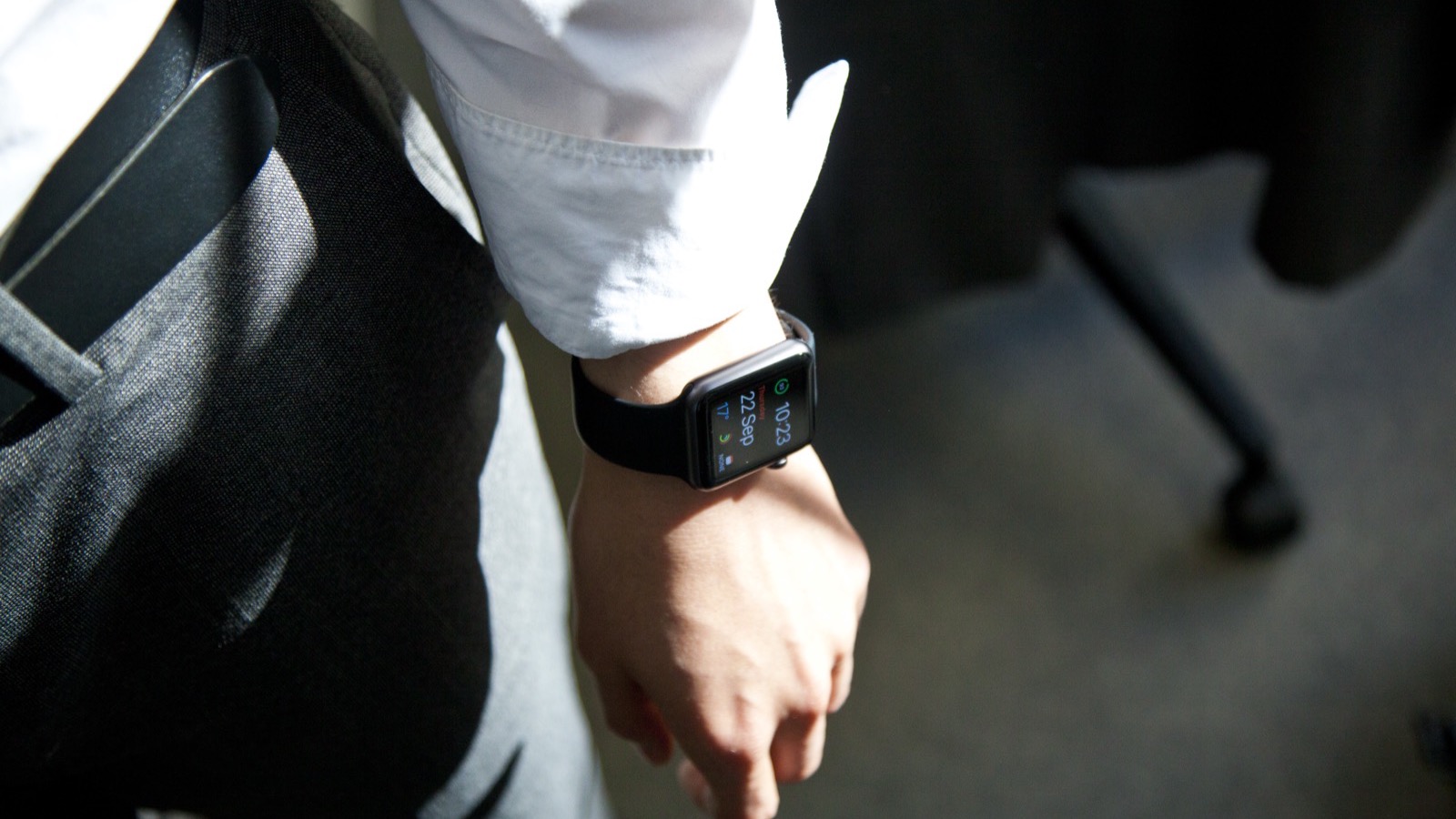
Here's the thing that doesn't make it into most comparisons. The core inputs both companies charge for — overnight HRV, resting heart rate, respiratory rate, sleep duration, wrist temperature — are already being collected by the watch on your wrist.
The real difference is interpretation. WHOOP and Oura sell you a model that turns those raw signals into a single judgement, and their models are opinionated in ways that suit their hardware.
That's exactly the gap Century AI was built for. It reads the data your Apple Watch already records and turns it into one daily health score, a recovery score, and a plain-language explanation of what changed and why. No second device, no ring to charge, no band to swap between wrists. If you want to see how the same logic maps onto a watch-based score, the breakdown of replicating WHOOP's recovery score with Apple Watch is the closest apples-to-apples comparison.
If you're choosing between WHOOP and Oura because you want better sleep and training decisions, the honest answer might be that you need better interpretation of data you already have, not another sensor.
Summary
- Both devices are accurate enough to trust for trends, and neither is precise enough to trust for single-night sleep stage numbers.
- Oura has the edge on overnight HRV and resting heart rate in the most direct validation study (concordance 0.99 vs 0.94 for WHOOP 4.0).
- Sleep staging accuracy is essentially tied between them, and both are moderate.
- WHOOP's differentiator is Strain — a training load number Oura doesn't offer.
- Oura's differentiator is quiet, physiology-first readiness with temperature deviation.
- The business models differ meaningfully: WHOOP requires ongoing payment to function, Oura works without a subscription at a reduced feature set.
- If your actual goal is "tell me whether to train hard today," an Apple Watch plus a good interpretation layer covers it without a new device.
Century AI helps you understand your body with a daily health score, recovery score, and sleep insights — using the watch you already wear.