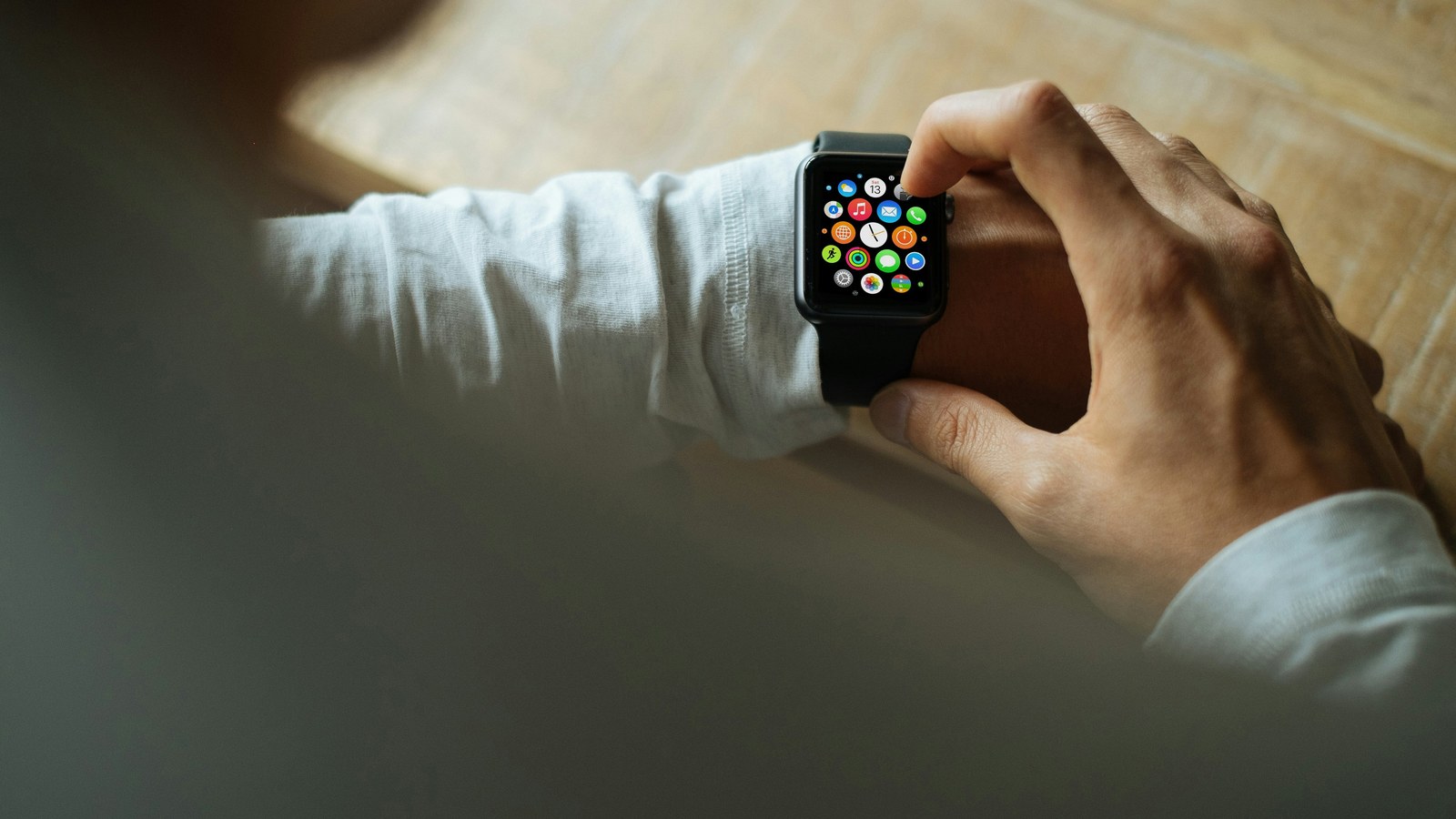
The Oura Ring and the Apple Watch are usually talked about as competitors, but they were built to solve different problems.
The ring is a passive sensor. It has no screen, no notifications, no workout modes worth the name. You wear it and forget it, and everything it knows about you comes from the skin of one finger while you go about your day and sleep.
The Apple Watch is a small computer on your wrist. It knows your runs and your GPS routes, it can take an ECG, and it has spent a decade becoming the default health wearable for anyone with an iPhone.
So "which is better" isn't really the question. The better question is which one measures the thing you actually care about, and whether you'll keep wearing it in the situation that matters most — which, for recovery and sleep data, is overnight. Here's how the evidence stacks up on sleep accuracy, HRV, recovery scores, and the practical question of what you're willing to put on your body every night.
TL;DR: For sleep, both devices are good enough that raw accuracy is a weak tiebreaker. A 2024 study that put the Oura Ring Gen3, Fitbit Sense 2, and Apple Watch Series 8 on the same 35 people against lab polysomnography found all three detected sleep versus wake with ≥95% sensitivity, and the Oura was statistically indistinguishable from PSG for wake, light sleep, deep sleep, and REM. The Apple Watch got sleep duration right but underestimated deep sleep by 43 minutes and overestimated light sleep by 45 minutes on average in that study — a stage-mapping quirk, not a "your sleep is bad" signal. Oura's 2024 validation against multi-night PSG found 91.7–91.8% overall accuracy with no significant difference in total sleep time, sleep onset latency, or time in deep sleep. Where the devices genuinely differ is recovery scores (Oura has a dedicated Readiness Score; Apple has no single number), HRV measurement (Oura samples continuously overnight and reports rMSSD-style values, Apple Watch takes periodic background readings reported as SDNN, which is why the numbers aren't comparable between them), and friction: a week of battery and no screen versus a device you charge daily and might not sleep in. Pick the ring if sleep and readiness are the whole point and you'll never miss a night. Pick the watch if you train, want workouts and GPS, or want clinical-grade extras like ECG and FDA-cleared sleep apnea notifications.
YouTube: Related video
Sleep tracking accuracy: how much does it actually differ?
The fairest comparison is a study where both devices went on the same people on the same night, next to a lab sleep study as the reference standard. That study exists, and it's more interesting than the marketing suggests.
Thirty-five adults without sleep disorders spent a night in a lab wearing the Oura Ring Gen3, a Fitbit Sense 2, and an Apple Watch Series 8 while polysomnography (PSG) recorded their actual brain activity. PSG is the clinical gold standard: electrodes, sleep stages scored by a human or a validated algorithm, no guessing.
| Device | Sleep vs wake sensitivity | Stage sensitivity | Notable bias vs PSG |
|---|---|---|---|
| Oura Ring Gen3 | ≥95% | 76.0–79.5% (precision 77.0–79.5%) | No significant difference for wake, light, deep, or REM |
| Apple Watch Series 8 | ≥95% | 50.5–86.1% (precision 72.7–87.8%) | Underestimated wake by 7 min and deep sleep by 43 min; overestimated light sleep by 45 min |
| Fitbit Sense 2 | ≥95% | 61.7–78.0% (precision 72.8–73.2%) | Overestimated light sleep by 18 min; underestimated deep sleep by 15 min |
Read that table carefully and you'll notice two things.
First, everything is good at the thing that matters most in practice: knowing whether you were asleep or awake. Every device cleared 95%. If your goal is "did I sleep enough," any of these answers accurately.
Second, the Apple Watch's weak spot is stage mapping. Underestimating deep sleep by 43 minutes is a big number. It does not mean Apple Watch users are short on deep sleep — it means the algorithm assigns a large chunk of what PSG calls deep sleep to the "core" (light) category. This is one of the most common sources of confusion in wearable data: your deep sleep number is partly an artefact of how your device draws the lines between stages. It's a reason to look at trends within one device rather than comparing your deep sleep against a friend's.
Oura's validation record tells a similar story. A 2024 study of the Gen3 ring with its updated sleep staging algorithm compared against multi-night polysomnography in 96 participants and 421,045 scored 30-second epochs found no statistically significant difference from PSG for time in bed, total sleep time, sleep onset latency, wake after sleep onset, light sleep, or deep sleep. It underestimated sleep efficiency by 1.1–1.5% and REM sleep by 4.1–5.6 minutes, with overall accuracy of 91.7–91.8%.
And the older de Zambotti study from 2017 — the one that first put a consumer ring up against PSG — found the original Oura didn't differ significantly from PSG on sleep onset latency, total sleep time, or wake after sleep onset, though it underestimated deep sleep by about 20 minutes and overestimated REM by about 17 minutes. It also sorted people into sleep duration bands (<6h, 6–7h, >7h) correctly about 91%, 81%, and 93% of the time, which is really the practical test: does the device put you in the right bucket?
The honest verdict on accuracy: the Oura Ring has the better-validated sleep staging record, especially for deep sleep. But the gap is narrow, and neither device is accurate enough to justify making decisions based on a single stage number. If you want to understand what those stage figures do and don't mean, our guide to wearable sleep tracking accuracy goes deeper.
HRV: the biggest practical difference nobody explains
Here's the thing that confuses people most when they switch or wear both devices: the HRV numbers don't match, and they're not supposed to.
The two devices measure heart rate variability two different ways.
- Oura Ring: samples heart rate continuously through the night from the finger, and reports HRV in the time domain with an emphasis on beat-to-beat variation while you sleep. Because it's running all night, you get a full overnight picture rather than snapshots.
- Apple Watch: takes periodic background HRV readings when you're inactive, plus readings during Breathe/Mindfulness sessions, and reports them as SDNN — a different mathematical measure of variability than the rMSSD-style figure rings and straps typically show.
SDNN and rMSSD are correlated but not equal. Daytime readings and overnight readings aren't comparable either. So if you wear both and see "my HRV is 62 on the ring and 38 on the watch," nothing is broken. You're looking at two different metrics, sampled at two different times, on two different body sites.
What this means practically:
- Never compare HRV across devices. Compare it to your own baseline on the same device.
- Overnight is the better window for a stable reading, because movement and stress don't contaminate it. The ring gets this by design. The watch gets it only if you wear it to bed.
- If you don't sleep with your Apple Watch on, you have no overnight HRV at all — just daytime snapshots, which bounce around a lot more. That single detail invalidates a lot of "my Apple Watch HRV is useless" complaints. It's not useless; it's just not what you're measuring.
A tool like Century AI is built around this: it uses the overnight data your Apple Watch already collects to produce one recovery number, rather than asking you to interpret raw SDNN values that shift based on when they were sampled.
Recovery scores: the ring has one, the watch doesn't
This is the clearest functional difference, and it's not about sensors at all — it's about what each company chose to build on top of them.
Oura has a Readiness Score. Every morning it fuses your overnight HRV balance, resting heart rate, body temperature deviation, sleep quality, and previous day's activity load into a single 0–100 number with a plain-language recommendation. If you use Oura, you probably don't open the charts at all — you glance at one number. Our Oura Readiness breakdown covers exactly what goes into it.
Apple does not have a readiness score. What it has is a set of excellent components: overnight Vitals (comparing heart rate, respiratory rate, wrist temperature, and blood oxygen against your own baseline), Cardio Fitness (VO2 max), training load, and HRV. Apple's philosophy is to show you the data and let you interpret it. There's no "you're 72 today."
That's a genuine gap, and it's the reason a lot of Apple Watch users end up looking for something like a Whoop alternative — they want a readiness number without buying a second device. The practical workaround is a third-party app that reads Apple Health data and applies a readiness model on top, which is what Century does. The watch provides the raw signal; the score comes from software.
If you're choosing hardware based on this: pick Oura if you want a score built in and you're happy to pay a subscription for it. Pick Apple Watch if you're fine with components in exchange for more raw capability, and you'll layer a score on yourself.
Battery, comfort, and the overnight problem
Ignore this section at your peril, because it decides whether you have data at all.
- Oura Ring: about five to seven days of battery, charges in under an hour, no screen to distract you. You wear it overnight without thinking about it. That matters, because sleep and recovery data is the whole product.
- Apple Watch: roughly a day of battery for the standard models, and a daily charging ritual. Plenty of people take it off at night precisely so it can charge — which means their sleep and recovery data is thin or missing entirely, even though the hardware is capable of capturing it. If you use cellular, GPS-heavy workouts, or always-on display, expect the low end of that estimate.
This is the single most underrated factor in the comparison. A slightly less accurate tracker you wear every night beats a more accurate one you wear three nights a week. If you already take your watch off at night, adding an Oura Ring isn't redundant — it's filling a gap you've been living with.
Comfort is the flip side: some people hate sleeping with a wrist device and love a ring; a smaller number find the ring bothers them at night. Neither is more comfortable in the abstract. Try before you commit.
What the Apple Watch does that a ring can't
If the ring wins on sleep and readiness, the watch wins decisively on everything that happens while you're awake and moving.
- Workouts that actually track. GPS routes, pace, cadence, heart rate zones, swim tracking, structured intervals, automatic workout detection. The Oura Gen3-era ring fundamentally does not do this — it infers activity load from movement and heart rate, not from a workout with a start and end.
- VO2 max (Cardio Fitness). Apple Watch estimates it, and it's one of the better-validated estimates in consumer wearables. Oura doesn't produce a VO2 max.
- ECG and heart rhythm features. The Apple Watch can take a single-lead ECG and provides irregular rhythm and AFib history features. A ring has no ECG.
- Sleep apnea notifications. Apple Watch has a sleep apnea notification feature cleared by the FDA. Oura is positioned as a general wellness device. If breathing disturbances during sleep are a real concern, that difference is worth knowing — though neither replaces a proper sleep study.
- Fall detection, crash detection, emergency SOS. Medical and safety features a ring doesn't attempt.
The short version: the Apple Watch is a training and safety tool with a sleep tracker bolted on. The ring is a sleep and readiness tool with a weak activity tracker bolted on. Neither is pretending otherwise.
Cost, honestly
- Oura Ring: hardware in the mid-hundreds, plus a monthly subscription (around $6/month) for the scores and insights. Without the subscription the ring still tracks but the interpretative layer — the part you're buying it for — is behind the paywall.
- Apple Watch: hardware from around $249 (SE) to $799 (Ultra), no subscription. But you need an iPhone, and any third-party readiness app you add may have its own subscription.
Over three years, the ring's total cost of ownership can approach a mid-range Apple Watch once you add the subscription. If you already own an iPhone and a watch, the marginal cost of getting readiness data is a software subscription, not new hardware. That's the arbitrage a lot of people miss.
So which one should you pick?
Match the device to the question you're asking.
Choose the Oura Ring if:
- Sleep and recovery are the main reason you're tracking.
- You don't reliably wear a watch overnight, or you hate sleeping with one.
- You want a single readiness number with a plain-language recommendation and don't want to interpret charts.
- You're okay with a subscription and don't care about GPS or workout modes.
Choose the Apple Watch if:
- You train — running, cycling, swimming, lifting — and want workouts, zones, and GPS.
- You already have an iPhone and want one device that does notifications, safety features, ECG, and health tracking.
- You want your data in Apple Health, where it can feed any app you like.
- You'd rather pay for hardware once than subscribe indefinitely.
If you already own an Apple Watch and are tempted by a ring: before you spend, check whether the gap is the device or the habit. If you take your watch off at night, try wearing it for two weeks with Sleep Focus on and see whether you actually get better data. If you still find wrist-worn sleep tracking annoying, or you specifically want a built-in readiness score without interpretation, then the ring is solving a real problem rather than a hypothetical one.
If you want the score without the second device: the readiness layer is software. Anything that reads your overnight Apple Watch data — HRV, resting heart rate, respiratory rate, wrist temperature, sleep — can produce a readiness-style number. That's exactly the design of Century AI: a daily health score and recovery score from the watch already on your wrist, no ring, no subscription to a hardware maker.
Summary
- Sleep accuracy: closer than either brand implies. In the same-night PSG comparison, all three devices detected sleep versus wake with ≥95% sensitivity. Oura was statistically indistinguishable from PSG on wake, light, deep, and REM; the Apple Watch underestimated deep sleep by ~43 min and overestimated light sleep by ~45 min.
- Oura's validation record is stronger for sleep staging, including a 2024 multi-night PSG study showing no significant difference in total sleep time, sleep onset latency, or deep sleep, with ~92% overall accuracy.
- HRV isn't comparable across devices. Oura samples overnight and reports time-domain HRV; Apple Watch reports periodic SDNN readings. Compare each to its own baseline, never to each other.
- Recovery scores: Oura has a built-in Readiness Score. Apple Watch has components (Vitals, Cardio Fitness, training load) and no single number — a gap third-party apps filled.
- The deciding factor is often battery and comfort, not accuracy. A device you wear every night produces data; a device you take off to charge doesn't.
- Apple Watch wins on training, GPS, ECG, and cleared safety features. Oura wins on passive, all-night wear and a ready-made readiness number.
Century AI helps you understand your body with a daily health score, recovery score, and sleep insights — using the watch you already wear.