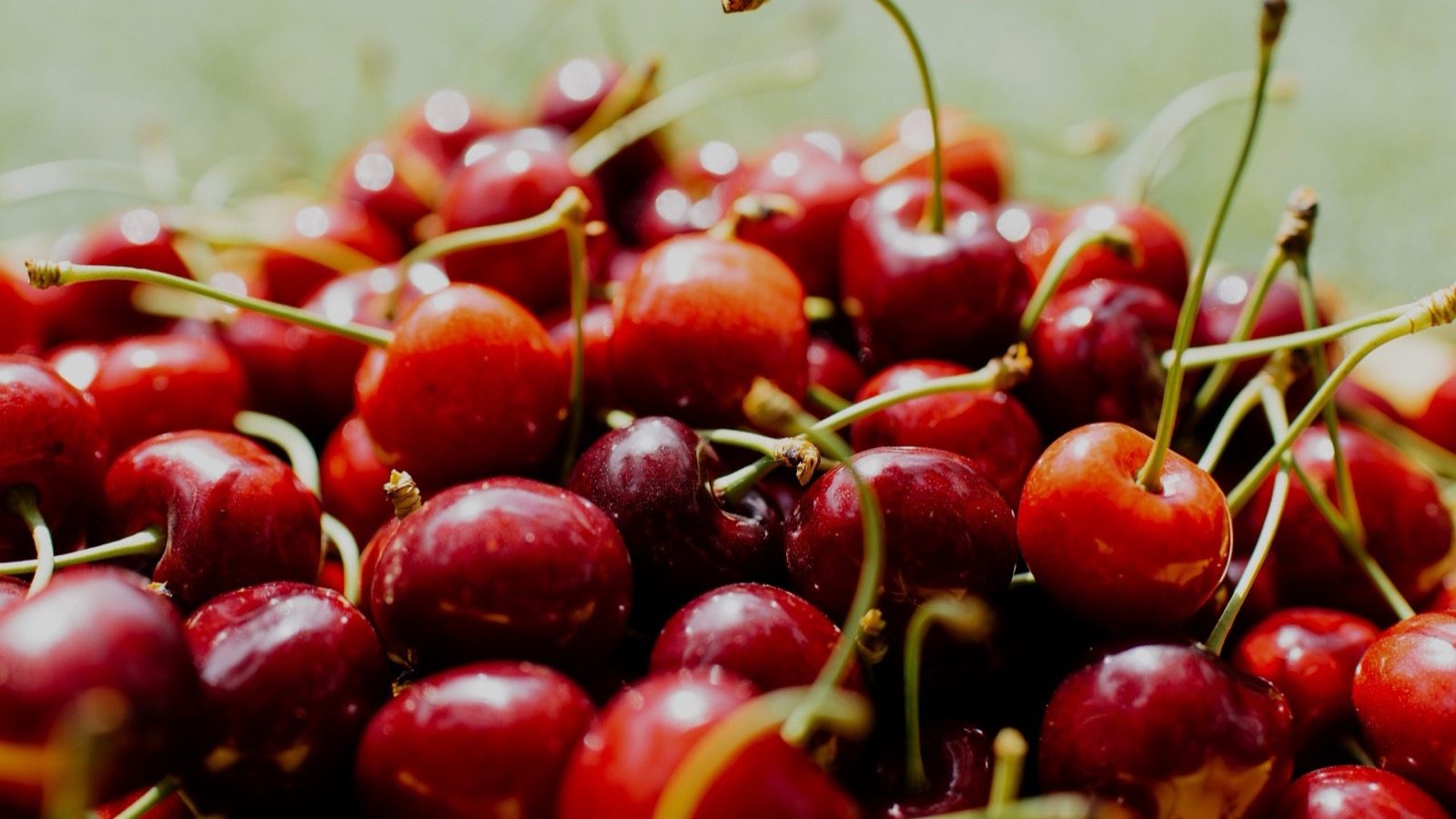
Tart cherry juice has become the internet's favorite sleep hack. The pitch is simple and appealing: drink a glass before bed, fall asleep faster, sleep deeper, wake up recovered. Like most sleep hacks, the reality is more interesting than the marketing — and more limited than the claims suggest.
Here's the part that makes tart cherries genuinely unusual among "sleep foods": they're one of the very few dietary sources of melatonin, the hormone that tells your brain it's nighttime. On top of that, they carry a specific class of polyphenols that seems to interact with the pathway your body uses to make serotonin and melatonin from tryptophan.
That's a real mechanism, not folklore. But a real mechanism is not the same as a reliable effect, and the trials themselves are a mix of promising and flat results.
This post walks through what tart cherries actually contain, what each controlled trial measured, where the evidence is strong and where it thins out, how the drink compares to capsules, and how to run a sensible two-week test on yourself using the sleep and recovery data your watch already collects.
TL;DR: Tart cherries contain measurable melatonin plus procyanidins that may increase tryptophan availability by inhibiting the enzyme IDO. In a randomized crossover trial of 20 healthy adults, 7 days of tart cherry juice concentrate raised urinary melatonin and significantly increased time in bed, total sleep time, and sleep efficiency. A pilot in 15 older adults with chronic insomnia found significant improvement in insomnia severity but no significant difference from placebo in sleep latency, total sleep time, or sleep efficiency — effect sizes were moderate to negligible and clearly smaller than CBT-I or prescription hypnotics. A small polysomnography pilot (8 completers) found 84 more minutes of sleep time on cherry juice, while a 2024 crossover trial of 500 mg tart cherry capsules in 34 adults with sleep issues and overweight found no effect on sleep or inflammation at all. Practical summary: juice or concentrate, not capsules; 7-14 days, not one night; effect sizes in the 10-25 minute range on sleep time in most positive studies, not an hour. It's a low-risk nudge, not a treatment for insomnia.
YouTube: Related video
What's actually in a tart cherry
Two separate things are going on, and it helps to keep them separate.
1. Melatonin. Montmorency tart cherries contain melatonin, which is unusual. Almost no other common food does it in a way that shows up in your urine after you eat it. In the Howatson trial, participants' total urinary melatonin output rose significantly after a week of tart cherry juice concentrate, while it stayed flat on the placebo. That's a measurable, physiological change, not a survey response.
2. Polyphenols that affect tryptophan. The larger share of the research attention goes to compounds called anthocyanins and procyanidins, which give the cherries their deep red colour. In the Losso pilot, cherry juice procyanidin B-2 inhibited an enzyme called indoleamine 2,3-dioxygenase (IDO) in a dose-dependent way in vitro. IDO breaks down tryptophan — the amino acid your body needs to make serotonin and, downstream, melatonin. Inhibit IDO, and more tryptophan stays available for that pathway.
The same study found that serum kynurenine-to-tryptophan ratio and prostaglandin E2 both fell in the cherry juice group. Translation: less tryptophan being shunted down the inflammatory branch, and less of a specific inflammatory marker. That's a coherent story that goes beyond "melatonin makes you sleepy."
One honest caveat on the melatonin angle: the amount in the fruit is small compared with a melatonin tablet. Whatever is happening in these studies is probably not a simple pharmacological melatonin hit. The polyphenol pathway and general anti-inflammatory effects are likely doing part of the work.
What the controlled trials actually found
Four studies are the ones worth knowing. They don't all agree, and the disagreement is instructive.
| Study | Who | What they took | Result |
|---|---|---|---|
| Howatson 2012 (Eur J Nutr) | 20 healthy adults | 30 ml concentrate twice daily, 7 days | ↑ urinary melatonin; ↑ time in bed, total sleep time, sleep efficiency |
| Pigeon 2010 (J Med Food) | 15 older adults with chronic insomnia | Tart cherry juice blend, 2 weeks, crossover | Significant ↓ insomnia severity vs placebo; no significant change in sleep latency, total sleep time, or efficiency |
| Losso 2018 (Am J Ther) | 8 completers over 50 with insomnia (polysomnography) | 240 ml juice twice daily, 2 weeks | +84 min sleep time (p = 0.018); sleep efficiency improved on PSQI |
| Tucker 2024 (Nutrients) | 34 adults with sleep issues and overweight/obesity | 500 mg tart cherry capsules before bed, 14 days | No effect on sleep or inflammation markers |
Howatson 2012: the cleanest proof of mechanism
Twenty volunteers, double-blind, placebo-controlled crossover, seven days on each condition. This is a small study, but crossover designs are efficient: the same people serve as their own controls.
The juice group slept longer in bed, slept longer overall, and had better sleep efficiency, all statistically significant. Melatonin output rose. Critically, the placebo group showed no change in melatonin, which is what you'd expect if this is a cherry effect rather than a placebo effect.
Seven days and twenty people is not a lot. But the direction and the mechanism line up.
Pigeon 2010: modest, and honest about it
Fifteen older adults with chronic insomnia, two weeks of the juice versus two weeks of a placebo drink, with a washout in between. Participants improved on all sleep variables from before to after treatment — but when the researchers compared the juice directly against the placebo, the differences narrowed.
Only one measure separated clearly: minutes awake after sleep onset, i.e. how much time they spent lying awake in the middle of the night. Sleep latency, total sleep time, and sleep efficiency were not significantly better than placebo.
The authors were refreshingly blunt. Effect sizes were "moderate and in some cases negligible," at or above what you see with valerian, in line with some but not all melatonin studies, and — importantly — "considerably less than those for evidence-based treatments of insomnia: hypnotic agents and cognitive-behavioral therapies."
Keep that sentence in mind when you read confident headlines about cherry juice "curing" insomnia.
Losso 2018: the biggest number, the smallest sample
This one gets quoted constantly, because the number is memorable: 84 more minutes of sleep. It came from polysomnography — lab-grade measurement with electrodes, not a wrist estimate — in adults over 50 with insomnia, after two weeks of 240 ml of juice twice daily.
There are two reasons to be careful with it. First, it's a pilot: 11 people were randomized, 3 were excluded for sleep apnea, so 8 completed. Second, of five validated questionnaires, only one showed a significant improvement.
So: a striking result from a very small sample. Worth knowing, not worth betting your sleep on.
Tucker 2024: the trial that flat-lined
This is the study the marketing rarely mentions. Thirty-four adults with sleep complaints and overweight or obesity, randomized crossover, 500 mg of Montmorency tart cherry capsules an hour before bed for 14 days. The researchers measured total sleep time, deep and REM duration, naps, nocturnal sleep, subjective sleep quality, insomnia symptoms, and a panel of inflammatory markers including CRP, TNF-α, IL-6, IL-8, IL-10 and IL-17A.
Nothing moved. Not one measure.
What does that mean? Probably that the form and dose matter more than the "tart cherry" label. The positive studies used juice or concentrate in relatively large volumes. This one used a 500 mg powder capsule — the sort of product most people actually buy. The authors' own conclusion was that future trials in this population should test higher doses than currently recommended.
So does it work or not?
Here's the most defensible summary the evidence supports:
- There's a real mechanism. Melatonin content plus polyphenols affecting tryptophan availability. That part is solid.
- The positive effects are modest and mostly about how long you sleep, not how fast you fall asleep. Across studies, sleep latency is the least affected measure.
- Form matters. Juice and concentrate have the positive signals. Capsules at commonly sold doses have a negative trial against them.
- Duration matters. The positive studies ran 7 to 14 days. There is not much evidence for a single glass on a single night.
- Nobody has shown this fixes chronic insomnia. The one study that looked directly at insomnia severity found modest improvements versus placebo, explicitly smaller than CBT-I.
If you have chronic insomnia, clinical guidelines point to cognitive behavioural therapy for insomnia as first-line treatment, not a grocery item. Juice is something you might add; it isn't the plan.
How to actually use it, if you're going to
Use juice or concentrate, not capsules. That follows from the studies above. A typical protocol in the research is a glass in the evening, and in the Howatson trial, a smaller concentrated serving twice daily, morning and evening. If you go the concentrate route, follow the bottle's serving instructions — it's a concentrate, not a cordial.
Give it 7 to 14 days. That's the window the trials used. One glass tonight and a judgement call tomorrow morning is not a test.
Watch the sugar and the timing. Juice is still juice, and a serving carries a substantial sugar load. If you're sensitive to glucose or you're eating late already, that trade-off is worth thinking about — we covered the late-meal side of this in late-night eating and sleep quality. If you're also considering a melatonin supplement, our guide to melatonin dose and timing explains why timing matters more than most people expect.
Don't stack it with alcohol or a heavy meal. You'll have no idea what did what.
Keep everything else constant. Same bedtime, same caffeine cutoff, same training. Otherwise you're measuring your week, not the juice.
How to test it on yourself with data you already have
This is where a wearable earns its keep — not by measuring the juice, but by stopping you from fooling yourself.
Step 1: baseline for two weeks. Change nothing. Just let your watch collect normal data: sleep duration, sleep efficiency, time awake after falling asleep, sleeping heart rate, and your overnight HRV trend.
Step 2: add the juice for two weeks. Same serving, same time each evening.
Step 3: compare averages, not nights. This is the part people get wrong. Single-night sleep numbers swing wildly — alcohol, stress, room temperature, a late workout. Compare the 14-day average sleep duration and the 14-day average sleep efficiency before and after. A few minutes of change in a weekly average is a real signal; a jump of forty minutes on one Tuesday is noise.
Step 4: check the secondary signals. Sleeping heart rate and overnight HRV are useful because they're less sensitive to how you feel about your sleep. If your sleep time goes up but your sleeping heart rate doesn't budge and you feel the same, you probably achieved more time in bed rather than better sleep.
At Century, this is exactly the kind of question the app is built for: comparing a two-week block against your own baseline across sleep, recovery, and resting heart rate, rather than reading any single night as a verdict. Trends beat snapshots, and self-experiments need a before and an after.
Bottom line
Tart cherry juice isn't a gimmick. It's one of the few foods with a plausible, measurable path to your sleep system — a little melatonin, plus polyphenols that appear to keep more tryptophan available for serotonin and melatonin production.
It's also not the miracle the headlines promise. The positive trials used juice or concentrate over one to two weeks and produced changes in sleep time and efficiency in the range of tens of minutes, not hours. The one trial that tested a standard capsule dose found nothing at all. The one trial that measured insomnia severity head-to-head against placebo found modest gains — real, but smaller than what proper insomnia treatment delivers.
Which makes it a reasonable experiment and a poor treatment plan. If a glass of tart cherry juice in the evening is easy to keep up, doesn't crowd out better sleep habits, and your two-week data shows a genuine improvement in sleep efficiency, keep it. If your data is flat, you've learned something useful for the price of a bottle of juice.
And if you're waking repeatedly, snoring heavily, or dragging through your days despite eight hours in bed, the juice isn't the answer — that's a conversation with a doctor, and the data from your watch gives you something concrete to bring.
Century AI helps you understand your body with a daily health score, recovery score, and sleep insights — using the watch you already wear.