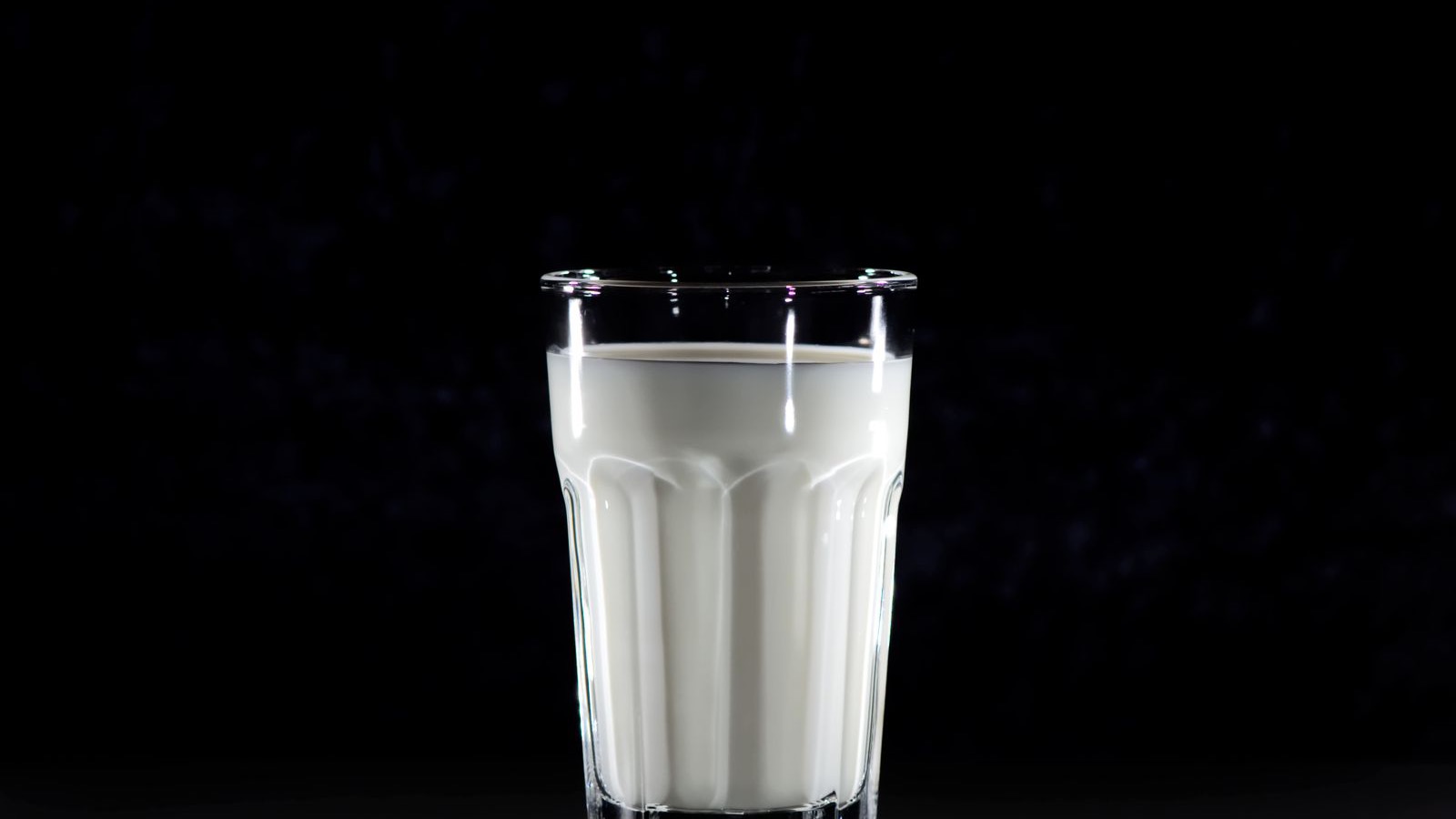
There's a specific piece of advice that shows up in almost every recovery conversation: take a slow-digesting protein shake before bed. The reasoning sounds solid — you're about to go seven or eight hours without eating, your muscles are repairing overnight, so give them something to work with.
Then there's the counter-advice, usually from sleep specialists: don't eat late, it raises your core temperature, it disturbs your digestion, it fragments your sleep, and it'll show up in your resting heart rate.
Both positions are stated with confidence. Only one of them is well supported.
This piece goes through what the randomised trials actually measured, what they found about sleep, who benefits and who doesn't, and how to test it on yourself with the data your watch already collects.
TL;DR: Overnight is a long fasting window, and pre-sleep protein extends the supply of amino acids to your muscles during it. Trials show that around 40 g of casein before sleep increases overnight muscle protein synthesis, and twelve weeks of pre-sleep protein alongside resistance training produced greater muscle mass and strength gains than training alone. On the sleep side, the controlled trials found no impairment in sleep quality, sleep efficiency, total sleep time, resting heart rate, or HRV — including one study that measured all of those with a WHOOP band in elite athletes. The catch is that it only adds meaningful value if you're not already hitting your daily protein target, and a large, heavy, high-fat meal right before bed is a different proposition from a 40 g shake.
YouTube: Related video
The problem pre-sleep protein is trying to solve
Muscle is in a constant state of turnover. Protein synthesis builds it up, protein breakdown takes it apart. Whether you gain, hold, or lose muscle over a day depends on the balance between the two, and that balance responds to two things: whether you're giving the system amino acids, and whether you're giving it a reason to adapt.
During the day, most people eat every few hours, so amino acids are usually available. At night, that stops. If you eat dinner at seven and breakfast at seven, that's a twelve-hour window with no protein coming in. Protein synthesis drops to a low baseline, breakdown keeps running, and for a chunk of that time your body is in net negative balance.
That's not a problem for one night. It's a slow erosion if it happens every night for years, which is one reason the conversation matters more after 40 than at 20.
Pre-sleep protein is an attempt to shorten that window. Give the muscle a slow-release supply of amino acids right before sleep, and it can keep building through more of the night instead of idling.
What the trials actually measured
The research here is unusually specific, which makes it easier to evaluate than most nutrition claims.
In a randomised controlled trial in healthy older men, published in the Journal of Nutrition, participants took either 40 g of casein, 20 g of casein, 20 g of casein plus leucine, or a placebo before sleep. The 40 g dose increased overnight muscle protein synthesis rates, and the effect was measurable in blood amino acid availability through the night. Age matters here: older muscle is less responsive to small amounts of protein, which is why the 40 g dose outperformed 20 g.
In a separate trial in young men doing a prolonged resistance training programme, pre-sleep protein taken over twelve weeks produced greater gains in muscle mass and strength than the same training without it. That's the result that matters most, because it moves from "a marker changed overnight" to "the outcome was better after three months."
The pattern across this literature is consistent:
- Around 30 to 40 g is the dose that reliably moves overnight synthesis
- Casein is used most often because it digests slowly and keeps amino acids available for hours, but other proteins work
- The effect is largest when the rest of the day's protein is not already optimal
- It stacks with resistance training, and matters less if you're not training at all
Does it wreck your sleep?
This is the question with the strongest folk belief and the clearest evidence against it.
A randomised crossover trial in older adults had participants take 40 g of casein, an isocaloric maltodextrin drink, or a placebo before bed. Sleep quality, measured across several domains, was not significantly different between any of the conditions. Next-morning appetite, energy intake, metabolic rate, and blood markers were also unchanged.
A 2025 randomised, double-blind, placebo-controlled crossover trial went further. Twenty-five NCAA Division I female athletes took 40 g of casein, 40 g of alpha-lactalbumin, 40 g of carbohydrate, or a placebo for three consecutive nights each, about 30 minutes before bed. The researchers measured total sleep time, sleep onset latency, sleep efficiency, resting heart rate, and HRV — all from a WHOOP 4.0 — plus subjective sleep quality and recovery.
No significant differences in anything. Total sleep time ranged from 7.47 to 7.62 hours, sleep efficiency from 91.5 to 92.0 percent, resting heart rate from 53.5 to 54.1 bpm, and HRV from 98.2 to 103.9 ms across conditions. Subjective sleep quality and next-morning recovery were also unchanged.
One small crossover trial in resistance-trained young adults did find that whey before bed improved sleep onset latency, sleep efficiency, and total sleep time compared with a carbohydrate control, while casein did not differ from control. That's a single small study, but it points in the same direction: pre-sleep protein is not a sleep disruptor.
What does seem to matter, and is worth separating out:
- Volume of liquid. A 400 ml shake right before bed means more overnight urination. In the older-adult trial, participants anecdotally reported disturbed sleep partly from getting up to pee.
- Habit departure. One of the more interesting findings in that literature is that people who habitually eat before bed sleep worse when they don't, and people who habitually don't eat before bed sleep worse when they do. Changing your routine is itself disruptive for a few nights.
- Meal size and composition. A 40 g protein shake is roughly 150 to 170 kcal. A full dinner at 11 pm is a different physiological event, with a bigger effect on core temperature, reflux, and glucose.
That distinction is where most of the conflicting advice comes from. "Don't eat before bed" is reasonable advice about large late meals. It is not evidence about a small protein shake.
Who actually benefits
Pre-sleep protein is a tool for a specific problem: not enough total protein across the day, or a need to support muscle maintenance through a long overnight fast. It is not magic, and it doesn't compound endlessly.
You probably benefit if:
- You're doing resistance training and want to maximise muscle gain or retention
- You're over 40 and trying to hold onto muscle, since older muscle is less responsive to protein and benefits from more per dose
- You struggle to hit 1.6 to 2.2 g of protein per kilogram of body weight during the day
- You eat dinner early and breakfast late, leaving a long gap
- You're in a calorie deficit, where muscle loss risk is higher
- You're an athlete in a heavy training block, where overnight recovery matters more
You probably don't need it if:
- You already hit your daily protein target comfortably
- You eat a protein-rich meal within an hour or two of bed
- You're not training and your goal is general health, not body composition
- You have reflux or GERD that gets worse lying down after eating
- You're trying to lose weight on a tight calorie budget and would rather spend those 160 calories elsewhere
How much, when, and what
If you're going to do it, here's what the research supports.
Dose: 30 to 40 g of protein. Below 20 g, the overnight synthesis response is weak, especially in older adults.
Timing: 30 to 60 minutes before bed. Long enough to not be lying down on a full stomach, short enough that absorption is still ramping up when you fall asleep.
Type: Casein is the default in the literature because it clots in the stomach and releases slowly over several hours. Milk is essentially a casein-and-whey blend and works well. Greek yogurt and cottage cheese are food versions with the same slow-release profile. Whey works too, it's just absorbed faster, and one small trial found whey actually improved sleep onset.
Practical options:
- 300 ml of milk with 25 g of added casein powder
- 200 g of cottage cheese
- 200 g of Greek yogurt with a spoon of chia
- A ready-made casein shake in water, if you'd rather not add the liquid volume of milk
What to avoid: a large, high-fat, high-fibre meal right before bed, and anything with caffeine. And keep an eye on total calories — pre-sleep protein is an addition to your day, not a replacement for a meal, unless you plan around it.
The part most people skip: total protein
Here's the thing that gets lost in the pre-sleep protein conversation. Timing is a rounding error compared with total intake.
If you're eating 0.8 g of protein per kilogram of bodyweight — the standard minimum for sedentary adults — adding a bedtime shake won't transform your recovery. Getting to 1.6 g per kilogram, spread across three or four meals, will do far more. The guide to how much protein you actually need covers the numbers and the evidence in detail, and it's the piece to read first if you're not sure where you sit.
Pre-sleep protein is the last five percent. It's a refinement for people who've already got the basics right.
What it won't fix
- Bad sleep. A shake doesn't compensate for a 5.5-hour night. The evidence shows it doesn't hurt, not that it helps you sleep.
- Overtraining. If your recovery score has been falling for two weeks, the answer is load, not nutrition timing.
- A poor diet. Protein powder is a convenience food, not a health upgrade.
- Alcohol. A drink before bed suppresses REM sleep and raises overnight heart rate regardless of what you eat with it.
Testing it on yourself
The nice thing about pre-sleep protein is that it's cheap to trial and easy to measure, because the outcome you care about shows up in your overnight data.
Run a two-week experiment:
- Week one: keep your normal routine. Note your bedtime, the time of your last food, and nothing else changes.
- Week two: add 30 to 40 g of casein or cottage cheese 45 minutes before bed.
- Compare: resting heart rate, HRV, sleep efficiency, time awake after sleep onset, and your next-morning recovery score. Also note whether you woke to pee.
If your resting heart rate rises by a couple of beats and your HRV drops noticeably across the week, that's a signal your body doesn't love the timing, and you can move it earlier or drop it. If nothing changes and your training is going well, you've confirmed it's not harming you.
That's exactly the kind of comparison Century is built for: it takes your overnight heart rate, HRV, respiratory rate, and sleep stages, and turns them into a daily health score and recovery score, so a two-week change in routine shows up as a before-and-after rather than a vague feeling. If you want to see how late eating in general affects those numbers, the piece on late-night eating and sleep quality is a good companion read.
A note on the "eight hours without protein" argument
You'll see the claim that you must eat protein before bed or your muscles will catabolise overnight. That's overstated. Muscle loss over the long term is driven by total daily protein, total energy intake, and training stimulus, not by an eight-hour gap. Bodybuilders in the 1980s slept eight hours without a shake and built plenty of muscle.
The honest version is narrower: pre-sleep protein improves overnight synthesis, and over twelve weeks of training that translated into measurably better gains. Whether that difference matters to you depends on how close to your genetic ceiling you're training and how much you care about the last few percent.
For most people reading this, the higher-leverage moves are a protein-rich breakfast, hitting 1.6 g per kilogram across the day, and getting seven to nine hours of sleep. Pre-sleep protein is a reasonable addition for people who've done those.
The short version
Pre-sleep protein works, within limits. Thirty to forty grams of casein before bed increases overnight muscle protein synthesis, and twelve weeks of it alongside resistance training produced better muscle mass and strength gains than training alone. The trials do not show it damaging sleep — total sleep time, sleep efficiency, resting heart rate, and HRV were unchanged in controlled studies, including one using wearables in elite athletes. The main practical caveats are liquid volume, reflux, and the fact that it's only worth the calories if your daily protein isn't already sorted.
If you're going to try it, use 30 to 40 g of a slow-digesting protein about 45 minutes before bed, run it for two weeks, and let your overnight heart rate and HRV tell you whether your body agrees.
Century AI helps you understand your body with a daily health score, recovery score, and sleep insights — using the watch you already wear.