You've probably seen the number in a group chat or on someone's Strava profile: "FTP 280". It sounds authoritative, like a lab result, and it is the single most useful training number a cyclist owns. It's also one of the most badly measured.
The standard test is twenty minutes as hard as you can hold, then multiply by 0.95. That protocol is easy to explain and easy to get wrong. If you go out too fast, fade, and finish at 240 watts instead of 255, your zones for the next six weeks are built on a lie. And the 0.95 correction itself has a mean bias — in one study of trained cyclists the true maximal lactate steady state sat about 26 watts below the calculated FTP.
This guide covers what FTP actually measures, how to run the test so the number means something, what a good result looks like for your weight, and how to turn it into zones you can ride by.
TL;DR: FTP is the highest power you can hold in a steady state — roughly an hour, roughly your second lactate threshold. The standard test is a 20-minute maximal effort multiplied by 0.95, but that correction tends to land slightly above true threshold. Do a proper warm-up with one hard 5-minute effort first, pace even or slightly negative, retest every 4–8 weeks under similar conditions, and use the result to set zones rather than to compare yourself to strangers on the internet. A field test is reliable; it is just not interchangeable with a lab measurement.
YouTube: Related video
What FTP actually measures
Functional threshold power is the highest average power you can sustain while blood lactate stays roughly stable instead of climbing. Below that intensity, your body clears lactate as fast as it produces it. Above it, lactate accumulates, you start breathing harder than the effort deserves, and the clock is running.
That's the concept. The lab version of the same idea is maximal lactate steady state (MLSS): the highest workload you can hold for a long period — typically tested across several 30-minute constant-load rides — without lactate rising more than about 1 mmol/L in the last 20 minutes of each.
FTP is the field-test approximation of MLSS. Andrew Coggan popularised it in Training and Racing with a Power Meter, and the cycling world adopted it because it requires a power meter instead of a lab, a lactate analyser, and a technician.
Two honest caveats from the research:
- It is a good estimate, not an equivalence. A 2019 study in trained cyclists found FTP correlated almost perfectly with MLSS (r = .91) with a small average bias, but 95% limits of agreement around ±9%. That means for any individual, the estimate can be off by a meaningful margin even when the group average looks excellent.
- The 0.95 factor is too generous for many riders. A 2022 study found MLSS averaged 26 ± 7 watts below FTP calculated as 95% of a 20-minute effort, and that an individual correction factor was needed to get close. Another study found MLSS sat at about 88.5% of the 20-minute power — and even that percentage varied too much between riders to be trusted as a universal rule.
None of this makes FTP useless. It makes it a training reference rather than a physiological fact. For setting zones and tracking change over time, that's plenty.
Why the 20-minute test became the standard
The 20-minute test won because it's practical. A full hour at threshold is brutal, hard to pace, and leaves you wrecked for days. Twenty minutes is uncomfortable but recoverable. A scoping review of the FTP20 literature found it to be a reliable test — repeat tests on the same rider produce consistent numbers — while noting that its relationship to other physiological markers has wide limits of agreement and that most studies involved trained men.
Reliability is the property that matters for training. If your test conditions are consistent, a rise from 240 to 255 watts after a block of training means something, even if neither number is your precise MLSS.
The protocol, properly
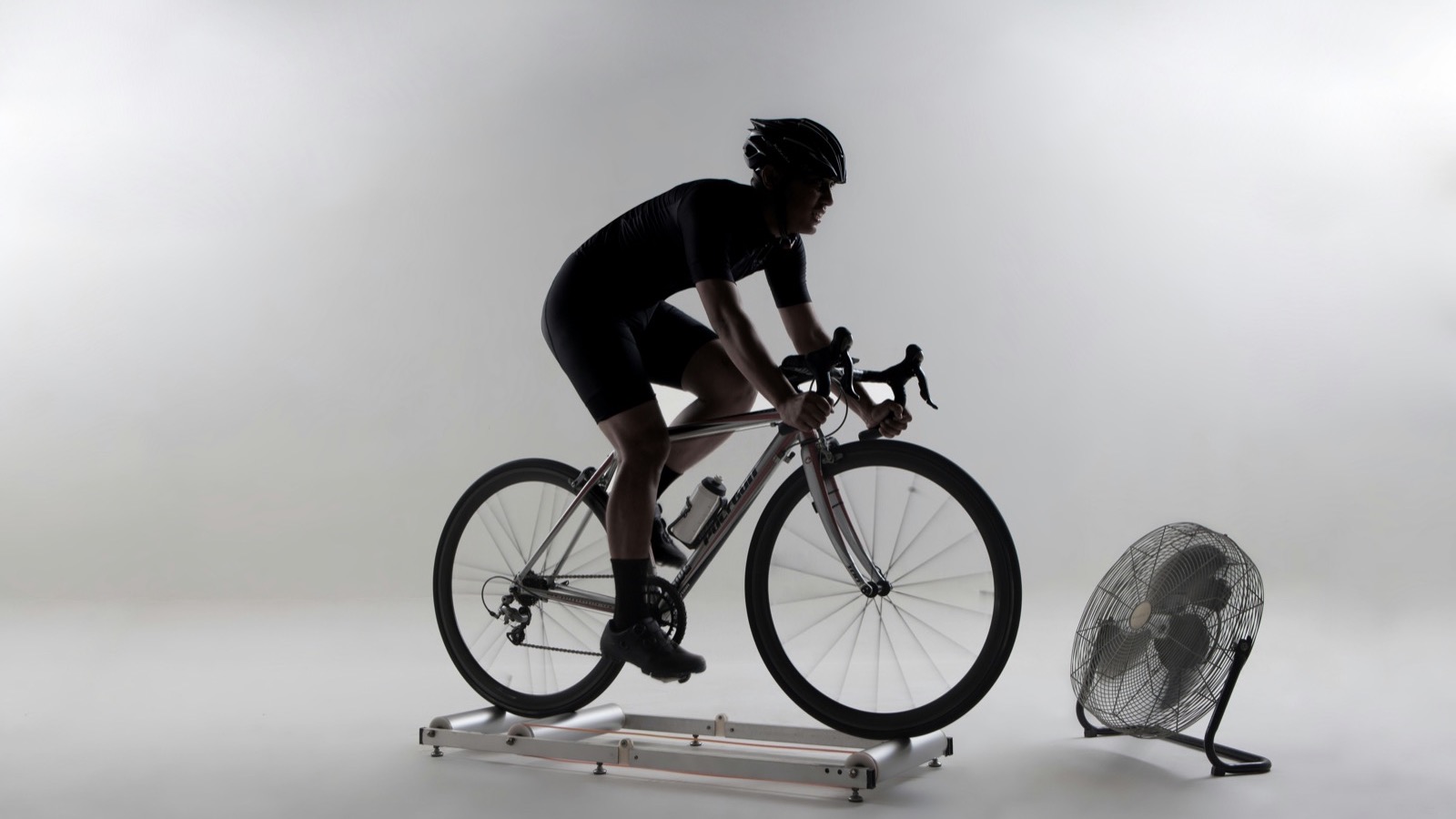
Here's the version worth doing. Total time: about 75 minutes. You need a power meter or a smart trainer, a fan, and water.
1. Rest first. No hard ride the day before. Don't test after a bad night's sleep or a long week. You are measuring your engine, not your fatigue.
2. Same setup every time. Same bike, same trainer mode (ERG off for the test), same cadence preference, same time of day if you can manage it. Calibrate your power meter or spin down your trainer per the manufacturer's instructions.
3. Warm up for 20 minutes easy, then do a 5-minute all-out effort — not paced, just hard. This is the part most people skip, and it's the part that matters. The 5-minute blowout opens up your anaerobic system and burns off the top-end contribution that would otherwise inflate your 20-minute number. It also gives your body a chance to shift into aerobic mode for the actual test.
4. Recover for 5–10 minutes spinning easy. You should feel ready but not fresh.
5. Ride 20 minutes as hard as you can hold evenly. Start at a pace you're certain you can finish, aim to hold it, and if you have anything left in the last 3 minutes, empty it.
6. Take your average power for the 20 minutes and multiply by 0.95.
A worked example: 20-minute average of 250 W → FTP estimate of 237 W.
Pacing beats heroics
The most common failure is a fast first five minutes. You feel good, you push, and then you spend fifteen minutes watching the number bleed downward. The average you end with is lower than a steady effort would have produced, and your zones are set too low for weeks.
Aim for even splits, and if you have to err, err on the side of starting two or three percent below your target and lifting in the final third. Negative splitting a 20-minute test is a skill; it's also the difference between a number you can train on and a number you have to guess around.
What about the ramp test?
Ramp tests are popular on indoor platforms because they're short and you don't have to pace them. You ride until you can't, and the platform estimates FTP from your best minute of power. They're convenient, and for beginners they're a reasonable starting point.
The catch: a ramp test rewards anaerobic capacity. Riders with a strong top end get an FTP estimate that's too high, and then every "threshold" interval becomes a survival exercise. If you use a ramp test, treat the result as a hypothesis and sanity-check it against how a 2×20-minute threshold session actually feels.
What a good FTP looks like
Absolute watts tell you very little without context. What matters is watts per kilogram, because it's what you're actually moving up a hill.
| Rider profile | FTP (W/kg) | What it roughly means |
|---|---|---|
| Untrained / new to cycling | 1.5–2.5 | Comfortable on flat routes, struggles on any real climb |
| Recreational, rides regularly | 2.5–3.2 | Can finish a sportive; climbs are slow but possible |
| Trained amateur | 3.2–4.0 | Competitive in local group rides and lower-category racing |
| Strong amateur / cat 1–2 | 4.0–4.8 | Front group on hard rides, competitive in most amateur races |
| Domestic pro | 4.8–5.5 | Race-winning power in national-level events |
| World Tour | 5.5–6.5+ | The pointy end of professional cycling |
Take those bands as orientation, not judgement. Age, sex, body composition, and years of training all shift them, and a 60 kg rider at 3.5 W/kg is having a very different experience from an 85 kg rider at the same ratio.
For context, if your FTP is 240 W at 75 kg, you're at 3.2 W/kg — a solid trained amateur. If you're 240 W at 95 kg, you're at 2.5 W/kg and the same absolute power puts you in a different training situation entirely.
Turning FTP into zones you can ride
Once you have the number, the useful work begins. Classic power zones are set as percentages of FTP:
| Zone | % of FTP | Feel | Purpose |
|---|---|---|---|
| 1 — Active recovery | <55% | Very easy, conversational | Recovery between hard days |
| 2 — Endurance | 56–75% | Easy, full sentences | Aerobic base, the bulk of your week |
| 3 — Tempo | 76–90% | Comfortably hard, short sentences | Sustained work, aerobic development |
| 4 — Threshold | 91–105% | Hard, a few words at a time | Raising FTP itself |
| 5 — VO2 max | 106–120% | Very hard, 3–8 minute efforts | Top-end aerobic power |
| 6 — Anaerobic | 121–150% | Short, violent | Attacks, sprints, surges |
| 7 — Neuromuscular | >150% | Seconds | Pure sprint |
The single most valuable thing this table does is make easy riding actually easy. Most amateur cyclists ride their endurance days at tempo because it feels like productive work. If your Zone 2 ceiling is 180 W, riding at 210 W on an "easy" day is a tempo ride. Do it three times a week and you accumulate fatigue without building the aerobic base you were aiming for.
If you don't have a power meter, the same structure works off heart rate, using lactate threshold heart rate rather than max heart rate. Our guide to lactate threshold and how to find it without a lab covers the field protocols, and the Zone 2 cycling guide walks through setting up zones on a watch.
How often should you retest?
Every 4–8 weeks is the usual advice, and it's sensible for two reasons. Fitness moves slowly enough that weekly testing is just noise, and the test itself is hard enough that doing it constantly eats into training.
Retest when:
- You finish a training block or a build phase.
- Your prescribed intervals start feeling noticeably easier or harder than they should.
- You've had a long break and are rebuilding.
- You changed position, bike, or power meter.
Don't retest when you're ill, sleep-deprived, or in the middle of a hard week. A test taken in a fatigued state produces a lower number, and then you spend a month training to a number that undersells you.
One useful habit: keep a note of the conditions next to each result — trainer or outdoors, cadence, time of day, how you felt. A 15-watt jump after switching from a wheel-on trainer to a direct-drive trainer isn't fitness. It's measurement.
What your watch can and can't do
Apple Watch doesn't measure power on its own, and it doesn't calculate FTP. If you ride with a power meter or a smart trainer that broadcasts to your watch, you can see live watts in the Workout app on recent watchOS versions, but the threshold analysis, zone modelling, and test protocols live in cycling apps and platforms.
What your watch does well is the other half of the picture: heart rate, heart rate recovery, resting heart rate, and how a hard test lands on your body over the next 24 hours. A 20-minute maximal effort is a significant stressor. If your resting heart rate is up 6 beats and your HRV is suppressed the next morning, that's not a sign you're broken — it's a sign you tested properly. If it's still suppressed three days later, you went deeper than you thought.
That's the useful pairing: power for the effort, recovery data for the cost. Century AI takes the heart rate and sleep data your watch already records and turns it into a daily readiness picture, which is exactly the information you want in the days after a test or a hard block.
Common mistakes worth avoiding
- Skipping the 5-minute blowout. Without it, your 20-minute power is inflated by anaerobic contribution and your zones come out too hard.
- Testing on a tired day and not noting it. A 20-watt drop that's really fatigue will send you into a needless easy week.
- Chasing a round number. Pacing to hit 250 because 250 sounds good is how you end up with a bad test.
- Treating FTP as a scoreboard. It's a training reference. It also moves with body weight, altitude, heat, and caffeine.
- Never retesting. Zones set in March are guesses by July.
- Ignoring heart rate entirely. Power tells you what you did; heart rate tells you what it cost. Use both. Our guide to heart rate drift explains why the same watts feel different after 90 minutes.
A simple way to use the number this week
If you've just tested, here's the plan most riders should follow:
- Set your zones from the result, not from a formula.
- Spend 70–80% of your riding time in Zone 2. Boring, and it works.
- Do one threshold session a week — 2×20 minutes at 95–100% of FTP, or 3×12 minutes. These are the sessions that move FTP.
- Do one VO2 max session a week if you're training seriously — 5×4 minutes at 110–115%.
- Keep one genuinely easy day where you don't look at power at all.
- Retest in six weeks under the same conditions.
That's it. The protocol is unglamorous, the test is unpleasant, and the payoff is that every other session has a target instead of a vibe.
The number isn't the point. Knowing which gear you're in is.
Century AI helps you understand your body with a daily health score, recovery score, and sleep insights — using the watch you already wear.