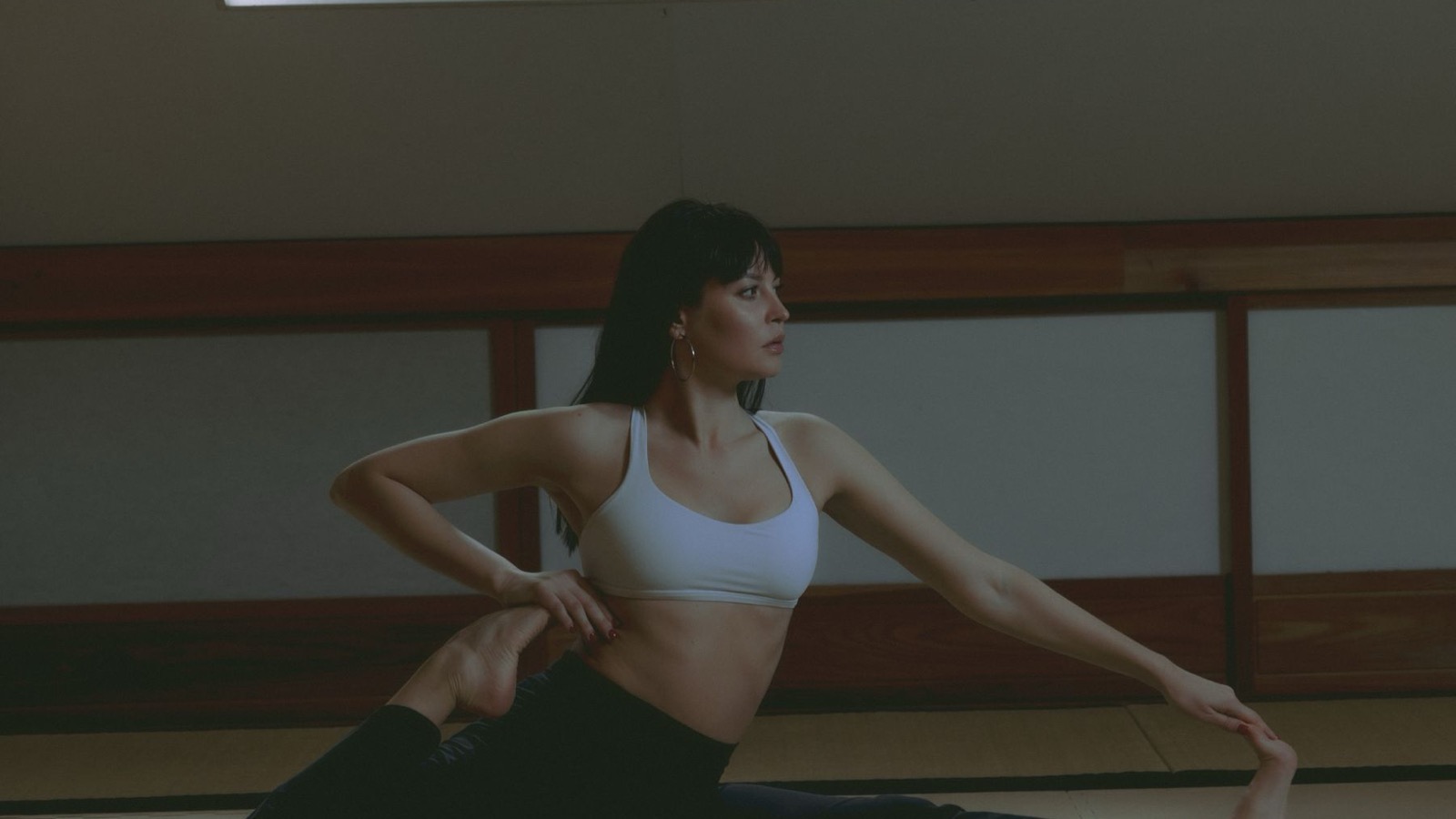
Yoga has a strange position in the recovery world. It's recommended for everything, by everyone, with the confidence usually reserved for things that have been proven. Pulled a hamstring? Yoga. Slept badly? Yoga. HRV in the gutter? Definitely yoga, ideally in a heated room, ideally at 6 a.m.
Some of that holds up. Some of it doesn't. And the split is more useful than either the hype or the dismissal, because it tells you which part of yoga is doing the work and which part you can skip.
Recovery isn't one thing. It's at least three: your nervous system coming back down, your tissue repairing itself, and your sleep being deep enough to consolidate the whole process. Yoga touches all three, but not equally, and not for the reasons the influencer with the mat would tell you.
TL;DR: Yoga reliably lowers perceived stress and modestly improves sleep quality. Those are the two effects with the most consistent support. Its effect on resting HRV is genuinely contested: one systematic review of 14 randomised trials found no convincing evidence, while a later meta-analysis of 17 trials found small but significant shifts toward parasympathetic balance. Both can be true, because the trials are short, small and heterogeneous. For muscle soreness, the evidence is weak and doesn't clearly beat other light movement. What yoga does well is deliver slow breathing and gentle movement in a format people actually stick to. That's a real benefit, just a less magical one than the marketing.
YouTube: Related video
What "recovery" is actually measuring
Before comparing studies, it helps to separate the outcomes. They're often lumped together, and that's where a lot of bad advice comes from.
| Recovery outcome | What it means physically | How you'd measure it |
|---|---|---|
| Autonomic recovery | Parasympathetic tone returning, heart rate settling | HRV, resting heart rate, heart rate recovery |
| Tissue recovery | Muscle damage repaired, inflammation resolved, range of motion restored | Soreness ratings, strength tests, range of motion |
| Sleep recovery | Enough deep and REM sleep to support repair and memory | Sleep stages, efficiency, subjective restedness |
| Perceived recovery | How recovered you feel | Questionnaires, a one-line morning note |
Yoga gets recommended as if it hits all four hard. It hits the fourth one almost certainly, the third one modestly, the first one ambiguously, and the second one weakly.
The HRV evidence is a genuine disagreement
This is the most interesting part of the literature, and most articles skip it.
The sceptical synthesis came first, in 2015. Posadzki and colleagues pulled 14 randomised trials of yoga versus any control in healthy people and patients, and assessed their quality. Only two of the 14 were of acceptable methodological quality. Ten trials reported favourable effects on some domain of HRV, and nine failed to show one. When they pooled the two trials that could be pooled, the result was null: the E:I ratio difference had a standardised mean difference of 0.63 with a confidence interval from −0.72 to 1.99, and the 30:15 ratio was likewise not significant. Their conclusion was blunt: "no convincing evidence for the effectiveness of yoga in modulating HRV."
Now the counterpoint. A 2018 meta-analysis in the Journal of Clinical Medicine pooled 17 medium-to-high quality randomised trials of mind-body exercise, combining Tai Chi and yoga. It found statistically significant shifts in frequency-domain HRV: normalised low-frequency down (Hedge's g = −0.39), normalised high-frequency up (g = 0.37), and the LF/HF ratio down (g = −0.58). Perceived stress fell more substantially, with a Hedge's g of −0.80. The authors concluded that stress reduction may be mediated by improved sympathetic-vagal balance.
So which is it?
The honest answer is that both reviews are describing the same thin evidence base from different angles. The 2018 analysis had more trials and better-quality inclusions, but it combined two different practices, used frequency-domain measures that are sensitive to breathing rate and analysis settings, and pooled outcomes with moderate to high heterogeneity. The 2015 review was stricter about quality and found almost nothing left to pool. Neither is wrong. What the pair tells you is that the effect, if real, is small and easily swamped by study design.
There's also a measurement problem specific to yoga. HRV during and immediately after a session rises because you spent twenty minutes breathing slowly. That's acute, and it's expected: slow breathing at around six breaths per minute amplifies respiratory sinus arrhythmia whether you're on a mat or sitting in a chair. The interesting question isn't whether HRV is higher right after yoga. It's whether overnight HRV shifts across weeks. Most of these trials didn't measure that.
If you want the effect that yoga definitely produces, it's the breathing. Resonance breathing does the same thing without the sun salutations, and you can do it in five minutes.
Sleep is where the evidence is strongest
This is the part of the recovery case that holds together.
A 2025 network meta-analysis in BMC Public Health pooled 86 randomised trials and 7,276 participants, comparing aerobic exercise, resistance training, combined training, yoga, Pilates and traditional Chinese exercise against no exercise. Yoga improved sleep quality with a standardised mean difference of −0.82, which is a moderate effect and clearly significant.
But here's the part the yoga studios won't quote: when the authors ranked the modalities by probability of being most effective, yoga came last, with a SUCRA of 30.1%. Pilates was first at 91.7%, aerobic exercise second at 69.7%. A separate network meta-analysis in the Journal of Clinical Sleep Medicine found a similar pattern: aerobic exercise was best for overall sleep quality and sleep latency, while yoga was best for sleep disturbance and sleep efficiency. So yoga helps sleep, but as a sleep intervention it's not the strongest option available.
The picture gets more nuanced again when you look at who's sleeping badly. A 2020 meta-analysis of 19 trials and 1,832 women with sleep problems found an overall improvement in sleep with a small effect size (SMD −0.327). Broken down: sixteen trials showed improvement on the Pittsburgh Sleep Quality Index (SMD −0.54), but three trials found no effect on insomnia severity measured with the Insomnia Severity Index, and the two trials that used actigraphy found no change in sleep efficiency or total sleep time. In other words, people report sleeping better more reliably than devices record them sleeping better.
That's a familiar pattern for anyone who follows recovery research. Subjective sleep quality is influenced by how you feel when you lie down, and yoga changes that. Objective sleep architecture is harder to move, and the interventions that move it best are the boring ones: consistent timing, light exposure, and enough time in bed.
Soreness: the weakest claim
Ask someone why they do yoga after a hard session and they'll say it flushes out the legs, prevents soreness, keeps them flexible. The first is loosely true, the second is mostly not.
Gentle movement after exercise does increase blood flow and can reduce stiffness temporarily. But the idea that stretching prevents delayed onset muscle soreness has been tested repeatedly and doesn't hold up. Soreness comes from mechanical damage and the inflammatory response to it, and nothing you do in the twenty minutes afterwards changes that much. What yoga reliably changes is how much the soreness bothers you, and your range of motion for the next day or two.
That's not nothing. If tight hips are why you hate running, twenty minutes of yoga is a better investment than a compression sleeve. But if you're choosing between yoga and an extra hour of sleep after a 20 km long run, sleep wins, and it isn't close. Foam rolling and stretching covers what the evidence supports in that space, and static versus dynamic stretching explains why the timing matters more than the stretch.
Why it still works, even with thin evidence
Three mechanisms explain the benefits that do show up, and none of them require believing that yoga is special.
Slow breathing. This is the strongest one. Breathing at roughly six breaths per minute, with a longer exhale than inhale, increases vagal tone and produces an acute HRV rise within minutes. Most yoga styles naturally slow the breath. So the physiological effect is real, it's just not specific to yoga. Any practice that gets you breathing slowly for ten minutes will do it.
Low-intensity movement. Active recovery works. Blood flow to working muscles, gentle range of motion, and a bit of circulation without adding training stress. The key word is low: a power vinyasa class can be genuinely hard, and a hard class is training, not recovery.
Attention and cessation. A yoga session is forty-five minutes where you're not answering messages, not thinking about work, and not training. That's a stress intervention that has nothing to do with postures. The same benefit shows up in meditation and in NSDR protocols, and it's probably a large part of the perceived-stress effect in the trials.
If you strip yoga down to those three things, you get a much clearer picture of when to use it: as a low-cost, low-risk way to downshift after training and before bed. Not as a treatment for anything.
Which style, for what purpose
Style matters far more than most articles admit, because the physiological load varies enormously.
| Style | Recovery value | Load | Best used for |
|---|---|---|---|
| Restorative / yin | High | Very low | Evening wind-down, post-race days, sleep onset |
| Slow flow / hatha | Moderate to high | Low | General recovery day, mobility |
| Vinyasa / power | Low as recovery | Moderate to high | A training session in its own right |
| Hot yoga / Bikram | Low as recovery | High | Not a recovery tool |
Hot yoga deserves its own note. A 90-minute class at 40°C drives heart rate into the same range as moderate cardio, produces significant fluid loss, and raises core temperature. Doing that on a rest day isn't recovery, it's a workout with a heat stress penalty attached. If you love it, count it as training. If you're doing it because someone said sweat removes toxins, do something else.
There's also a wrist-temperature angle worth knowing. Core temperature elevation shows up in overnight skin temperature, and a hot class in the evening can delay the drop in core temperature that helps you fall asleep. My guide to wrist temperature data explains what your watch does and doesn't capture there.
Three protocols that fit around training
You don't need a 60-minute class. These are the versions that are easy to actually do.
The 8-minute post-run reset. Legs up against a wall for three minutes, then a seated forward fold, a figure-four for each hip, and a supine twist for 90 seconds each side. Slow nasal breathing throughout, exhale longer than inhale. Purpose: parasympathetic downshift and hip mobility while you're already warm.
The 20-minute evening wind-down. Ten minutes of restorative poses held for two to three minutes each, then ten minutes of slow breathing lying down. This is the one with the best case for sleep, because it lowers arousal right before bed and doesn't raise core temperature. Pair it with a fixed bedtime and you're doing the two things that actually move sleep quality.
The 40-minute weekly session. One proper class or self-practice per week, on a rest day or after an easy run, not after intervals. Slow flow or hatha. This is maintenance: range of motion, hip and thoracic mobility, and the psychological benefit of a scheduled hour that isn't training.
What your watch can actually tell you
This is where most people go wrong, because they measure the wrong thing at the wrong time.
Don't judge yoga by your in-session heart rate. A restorative class will sit in Zone 1 and look like nothing happened. That's the point. Time in zone is a poor metric for a recovery session.
Do check your next-morning HRV and resting heart rate. An acute session effect is meaningless. A 10-day average that shifts after you add regular evening practice is worth noting. If overnight HRV is flat after three weeks, the practice isn't changing your autonomic baseline, whatever it feels like.
Do check sleep onset and efficiency, not just duration. If yoga moves your sleep latency down by ten minutes consistently, that's a real effect and worth keeping. If it only makes you feel calmer in the evening without changing sleep, that's still a benefit, just a different one.
Do watch the Training Load contribution. If you're on watchOS 11 or later, hard vinyasa and hot yoga will show up as load. That's correct, and it means they should replace a training session rather than sit on top of one.
Don't chase the post-session HRV number. It will be high. It's high because you breathed slowly for twenty minutes. That's a demonstration, not a measurement.
If you want a framework for which numbers to trust day to day, what a recovery score actually measures is the place to start.
How to test it on yourself
Two weeks, run properly, with a baseline first.
Week 0: record your normal sleep and HRV data without changing anything. Seven days minimum.
Weeks 1 and 2: add a 20-minute evening practice, same time each night, ideally 60 to 90 minutes before bed. Keep bedtime and wake time fixed, no alcohol, no other new variables.
Then compare weekly averages, not individual nights:
- sleep onset latency and sleep efficiency
- overnight HRV and resting heart rate
- how sore you feel the day after hard sessions
- a one-line note on evening calm
A real effect shows up as a shift in the averages. If nothing moves, you've learned that yoga isn't the lever for your recovery, and you can spend that time on sleep instead. That's a useful result too.
When yoga is the wrong tool
- When you're injured. Yoga can help with mobility around an injury, but a class isn't a diagnosis. Sharp pain, swelling, or pain that changes your gait needs a physio.
- When you're hypermobile. Deep stretches feel good and can push already-loose joints further. Focus on strength at end range instead of more range.
- When the problem is sleep debt. No amount of restorative yoga replaces an hour of sleep. If you're at six hours a night, the mat is not the intervention.
- When you're using it to avoid rest. A gentle class is still a session. Some weeks the recovery you need is a sofa.
- When it's standing in for protein and calories. Tissue repair needs substrate. Recovery is sleep, food, and load management, with movement practices on top.
The short version
- Yoga reliably reduces perceived stress and modestly improves sleep quality. Those are the strongest findings.
- The HRV evidence is genuinely contested: one review found nothing convincing, a later meta-analysis found small parasympathetic shifts.
- Most of the measurable benefit comes from slow breathing and low-intensity movement, not from yoga specifically.
- Soreness reduction is weak. Range of motion and how soreness feels are more realistic benefits.
- Style matters: restorative and slow flow help recovery, power and hot yoga are training.
- Measure the next morning, not the session. Acute post-yoga HRV tells you nothing.
- Test it for two weeks against a baseline before you build your week around it.
Yoga earns a place in a recovery routine as a low-cost way to downshift and move gently. It doesn't earn the place it currently has as a cure for everything, and being honest about that actually makes it easier to use well: pick the restorative end, put it in the evening, and let the data decide whether it's working.
Century AI gives you a daily recovery score from your HRV, resting heart rate and sleep, so you can see whether a new habit like this actually changes anything after a couple of weeks, rather than guessing from how you felt on one good morning.
This isn't medical advice. If you're managing an injury or a health condition, talk to a clinician or physio before adding a new practice.
Century AI helps you understand your body with a daily health score, recovery score, and sleep insights — using the watch you already wear.