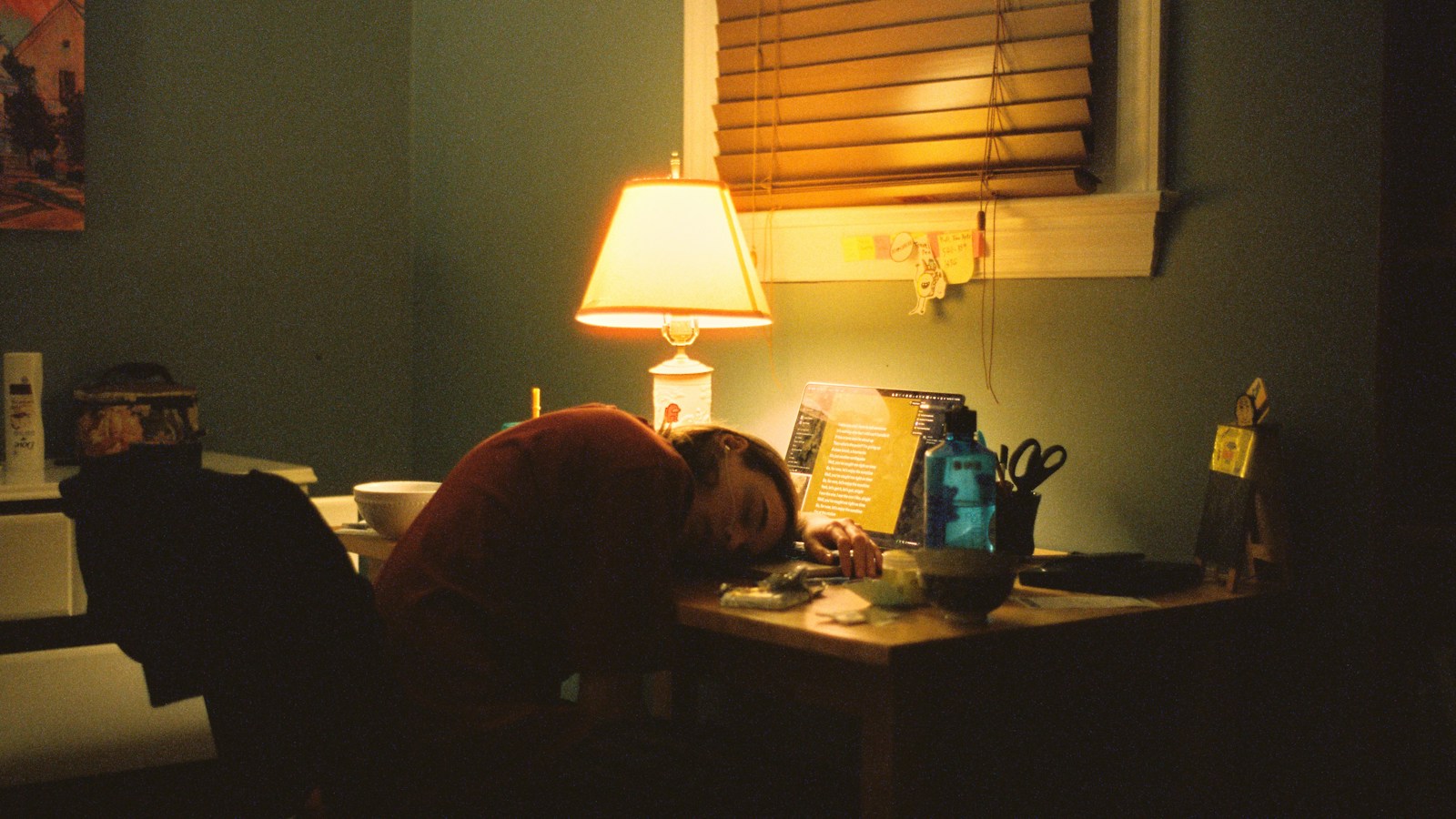
It happens at roughly the same time every day. Somewhere between 1:30 and 3:30 in the afternoon, your brain stops cooperating. You read the same sentence three times. You reach for coffee you don't really want. You start planning your evening around how early you can get into bed.
Most people treat this as a personal failing — too little sleep last night, a heavy lunch, not enough willpower. There's some truth in that, but not the whole truth. The afternoon dip is one of the most reliably documented patterns in human physiology, and it shows up in people who slept perfectly well the night before.
The useful question isn't "why am I so lazy in the afternoon?" It's "is this the normal dip, or is something amplifying it?" Those have very different answers.
TL;DR: The afternoon slump is real biology. There's a natural trough in alertness in the early-to-mid afternoon driven by your circadian system plus accumulating sleep pressure — it appears even when people skip lunch and don't know what time it is. Sleep debt, a late body clock, a high-carb or alcohol-heavy lunch, caffeine timing, and afternoon inactivity can all make it much worse. A normal dip passes in 30-60 minutes with light, movement, and a change of task. A dip that flattens you for two hours, or one that comes with loud snoring and morning headaches, deserves a closer look. Your watch can't diagnose it, but your sleep duration trend, sleep regularity, and overnight HRV can tell you whether you're paying off a debt or running a chronic deficit.
YouTube: Related video
What's actually happening at 3 PM
Two systems decide how alert you feel at any given moment, and both of them are working against you in the afternoon.
Sleep pressure. From the moment you wake up, a homeostatic drive to sleep accumulates. The longer you're awake, the stronger it gets. By mid-afternoon you've been up for eight or nine hours, which is a lot of accumulated pressure.
Circadian timing. Your internal clock isn't a flat line. It generates a rhythm with two main low points for alertness: one in the middle of the night, and a shallower one in the early-to-mid afternoon.
Where those two curves intersect, you get the dip. Sleep researchers have modeled exactly this — sleep propensity across 24 hours shows a major peak at night and a secondary bump in the early afternoon, which is why it's sometimes called the "nap zone." It doesn't matter whether you napped or not. The window exists either way.
The lunch connection is real but overrated. Timothy Monk's work at the University of Pittsburgh is the cleanest demonstration of this. In one early study, participants were tested every two hours on a monotonous vigilance task with lunch replaced by hourly liquid food supplements — no meal, no food coma, no postprandial glucose spike. The afternoon dip showed up anyway in a subset of them. What distinguished the people who dipped was the shape of their circadian temperature rhythm: those with a stronger 12-hour component, so that their temperature stayed flat or fell between 10:00 and 15:00 rather than rising, were the ones whose performance fell apart in the afternoon.
Monk's later review made the practical point: the post-lunch dip is a genuine biological phenomenon that occurs even when someone hasn't eaten lunch and has no idea what time it is. It's exacerbated by a high-carbohydrate lunch, and it may be more pronounced in extreme morning types — the people who are wide awake at 5 AM and useless by 4 PM.
So: the dip is normal. The size of your dip is what you can work on.
The difference between a dip and a problem
Here's where a lot of people go wrong. They assume that because the dip is normal, a two-hour afternoon collapse is also just something to push through. It isn't necessarily.
| Feature | Normal afternoon dip | Worth investigating |
|---|---|---|
| Timing | Arrives early-to-mid afternoon, similar time daily | Sleepiness at any hour, or a slump that arrives earlier and earlier |
| Duration | 30-60 minutes, eases with light, movement, or a task change | Two or more hours; you can fall asleep sitting still |
| Response to sleep | Better after a good night, worse after a short one | No change no matter how long you sleep |
| Other signs | None | Loud snoring, gasping or pauses in breathing, morning headaches, dry mouth, waking unrefreshed |
| Drive risk | No | Nodding off while driving or in meetings |
The middle rows matter more than the first. If sleeping 8.5 hours for a week doesn't touch your afternoon energy, that's not a discipline problem — it's information. Persistent daytime sleepiness despite adequate time in bed is one of the main screening signals for sleep apnea, and it's also associated with anemia and iron deficiency, thyroid problems, and depression. That's a conversation with a doctor, not a blog post.
If your afternoon crash comes with a snoring partner complaining about your breathing, don't spend six months optimizing your lunch. Get it looked at. (We've written about how sleep apnea shows up in wearable data — respiratory rate and HRV patterns — but the diagnostic path runs through a clinician, not a watch.)
Why your dip might be bigger than your colleague's
Assuming we're talking about the normal dip, amplified, here's roughly the order of impact I'd put things in.
1. Sleep debt (the big one)
Sleep pressure is the input you have the most control over. Seven hours in bed is not seven hours of sleep for most people — subtract time to fall asleep plus overnight awakenings and you're often looking at 30-45 minutes less than you planned. Do that five nights in a row and you're carrying a real debt into every afternoon.
The cruel part: sleep debt doesn't feel like sleep debt. It feels like normal, right up until you're in the middle of the dip. The most objective marker is your own trend, not your sense of how you slept. We get into how to read that in why you feel tired after 8 hours.
2. Circadian timing and sleep regularity
This is the underrated one. If your body clock runs late (a night owl pattern) but your alarm goes off at 6:30, you're living in permanent mild jetlag. Your circadian alerting signal hasn't fully ramped up in the morning and your dip arrives earlier and deeper.
Irregularity does the same thing even when duration looks fine. Varying your bedtime by two hours across the week keeps your clock from settling anywhere, which flattens your morning peak and deepens the afternoon trough. Consistency of timing is the lever most people never pull.
3. Your lunch, and what you drink with it
A high-carbohydrate lunch doesn't create the dip, but it makes it worse. Add alcohol and you've got a compound effect: alcohol is a sedative, it fragments the second half of the night's sleep, and it suppresses HRV well into the next day. That's a two-for-one hit on the next afternoon, which is why a working lunch with a glass of wine tends to produce a dead Wednesday and a groggy Thursday.
Blame the meal size and composition more than the meal itself. A huge lunch of any kind pulls blood flow toward digestion and leaves you sluggish for a different reason.
4. Caffeine timing
Caffeine doesn't create energy. It blocks the adenosine signal telling you you're tired. Two things go wrong:
- Drinking it too late. Caffeine has a half-life of roughly 5 hours in most adults, longer if you're a slow metabolizer or on certain medications. A 3 PM coffee is still meaningfully in your system at 8 PM.
- Front-loading it. If you drink coffee immediately on waking, some of its effect is redundant — your cortisol is already rising. And a big dose before the dip wears off right as the dip lands.
The practical version of this is in our caffeine cutoff guide: for most people, last caffeine 8-10 hours before bed, and treat the early afternoon as the last window.
5. Blood sugar swings and inactivity
If your afternoon energy looks like a cliff with a shakiness attached — hunger, irritability, sudden fatigue — the driver may be a glucose excursion and crash from a fast-digesting, low-protein lunch rather than the circadian dip at all. The fix is protein, fat, and fiber first, carbs second, and a walk after eating. We've covered the physiology in blood sugar and recovery.
Inactivity compounds everything. Sitting still all afternoon removes the two strongest immediate countermeasures you have: light and movement.
Fixes that work today
None of these are clever. They work anyway.
Get outside within 20 minutes of the dip arriving. Ten to fifteen minutes of bright light, ideally outdoors, plus walking, is the highest-yield intervention available. Daylight is orders of magnitude brighter than indoor lighting and it directly signals the clock.
Move before you crash, not after. A 5-10 minute brisk walk at 1:30 often prevents the dip from landing instead of trying to dig out once it has. If you can't leave the building, stairs twice is enough to shift how you feel.
Front-load hard cognitive work. Schedule the demanding stuff for the morning peak and calendar the dip for administrative tasks, calls, or anything that doesn't require deep working memory.
Eat a lunch that doesn't add to the problem. Protein-forward, moderate carbs, real vegetables, and water. Keep alcohol for evenings.
Try the coffee nap, with realistic expectations. The evidence here is genuinely fun: in a 1997 study by Reyner and Horne, drivers given caffeine plus a nap shorter than 15 minutes showed the biggest reduction in sleepiness — bigger than either caffeine or a nap alone. The mechanism is that caffeine takes about 20 minutes to kick in, roughly the time a short nap takes to clear adenosine. Drink the coffee, nap 15-20 minutes, then get moving. Note the "under 15-20 minutes" part: sleep longer and you risk sleep inertia — that heavy, worse-than-before fog you get when you wake from deep sleep.
If you'd rather just nap properly, our power nap guide covers length, timing, and how to avoid wrecking your night.
Get the light right in the evening, too. Bright light after dark pushes your clock later, which makes tomorrow's dip earlier and deeper. Dim the last hour.
Fix the wake time before the bedtime. You can't force yourself to fall asleep earlier on demand, but you can hold a fixed wake time and let the bedtime follow. This is the single most effective way to settle a drifting clock.
The two-week experiment
Most people try five interventions at once and learn nothing. Pick your suspected cause, change one thing, and hold it for 14 days.
| If your pattern looks like | Test this for 14 days | Success looks like |
|---|---|---|
| Short or fragmented sleep (watch reports under 7h, or lots of awake time) | Add 30-45 min to time in bed, same wake time | Average sleep up ~30 min, dip noticeably smaller by week 2 |
| Late or irregular schedule | Fix wake time within a 30-minute window, 7 days | Dip shifts later and shallower; morning alertness up |
| Cliff-edged, shaky crash after lunch | Protein-and-fiber-first lunch + 10-min walk after eating | Crash becomes a mild dip, no shakiness |
| Fine until the coffee wears off at 4 PM | Move last caffeine to before noon; no afternoon dose | Slower afternoon, better sleep, smaller dip by week 2 |
| Same dip regardless of anything | Bright light + 10 min walk at the dip window | Measurable improvement within days |
Write down what you're changing and your afternoon energy score (1-5) at the same time daily. Two weeks of data beats any theory, including mine.
What your wearable can and can't tell you
Your watch won't measure alertness. It does give you three things that predict it well:
Sleep duration trend — not last night. A weekly average is the number that matters. A single 5-hour night after a good week is not the same as a 6.5-hour weekly average.
Sleep regularity. Consistent bed and wake times show up in your data long before you feel the benefit. This is often the difference between people who can't beat the dip and people who can.
Overnight HRV and resting heart rate. These aren't energy meters, but they're honest about load. When HRV is running below your baseline and resting heart rate is up, you're carrying a physiological debt — and sleep deprivation reliably moves both in that direction. If the pattern persists for a week or more with no obvious training or illness explanation, the afternoon slump is a symptom of the same thing.
That's exactly the picture Century AI is built to show: a daily health score, a recovery score, and sleep insights from the watch you already wear, so you can see whether your afternoon crash tracks your sleep debt, your irregular week, or neither. If your dip and your data line up, you know what to change. If they don't, you've learned something worth telling your doctor.
Bottom line
The 3 PM crash is not a moral failure or a caffeine deficiency. It's a circadian trough, and it's part of being human. What you can control is how deep it goes — and mostly that comes down to how much sleep you're actually getting, how regular your schedule is, and whether you use light and movement at the right moment instead of another coffee at 4 PM.
Fix the debt and the irregularity first. Then use light, movement, a food-honest lunch, and careful caffeine timing to shave off what's left. If none of it shifts the needle, stop optimizing and get checked.
Century AI helps you understand your body with a daily health score, recovery score, and sleep insights — using the watch you already wear.